Menci Clement Crnčić’s Landscape Narratives
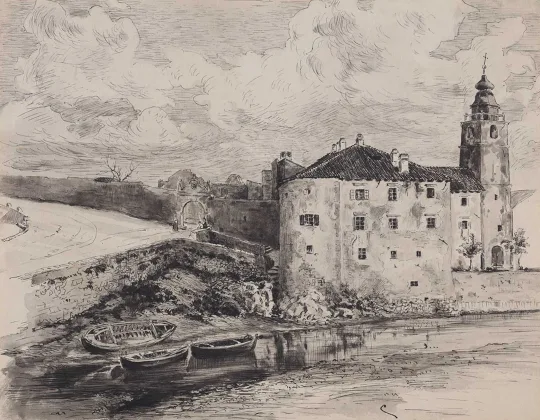
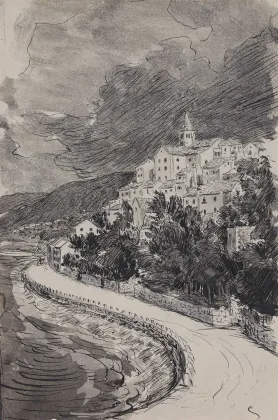
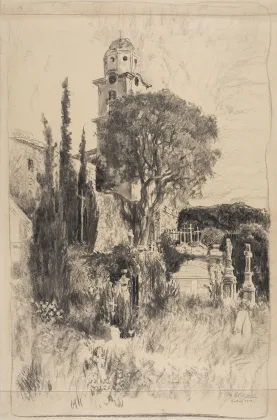
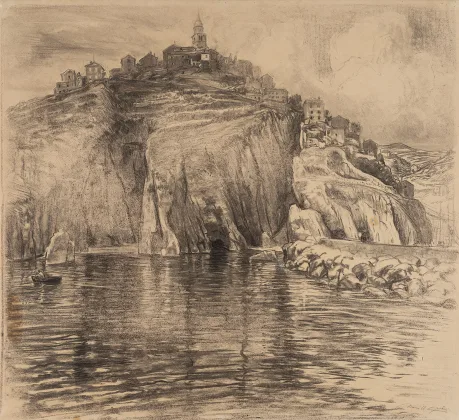
In the periodisation of the national art history, Crnčić’s inaugurational appearance at the art exhibition organised by the Society of Arts and Crafts in 1891 coincided with Posavac’s hypothesis about the official beginning of modernism in Croatian visual arts around 1890. Although Božena Šurina in her contribution to the study of Crnčić’s work claims that between 1895 and 1900 Crnčić – since he didn’t live in Zagreb at the time – “remained on the margins of Croatian modernism, which was precisely then in full swing,” Crnčić proved his affirmation at the national modernism exhibition platform with the works made in Vienna, right in the very centre of powerful modernist, i.e. symbolist trends.
In the periodisation of the national art history, Crnčić’s inaugurational appearance at the art exhibition organised by the Society of Arts and Crafts in 1891 coincided with Posavac’s hypothesis about the official beginning of modernism in Croatian visual arts around 1890. [1] Although Božena Šurina in her contribution to the study of Crnčić’s work claims that between 1895 and 1900 Crnčić – since he didn’t live in Zagreb at the time – “remained on the margins of Croatian modernism, which was precisely then in full swing,“ [2] Crnčić proved his affirmation at the national modernism exhibition platform with the works made in Vienna, right in the very centre of powerful modernist, i.e. symbolist trends.
In addition to Böcklin’s Isle of the Dead as the paradigmatic painting of symbolism, the early prints of symbolist predilection were undoubtedly influenced by his exposure to the Viennese exhibition of prints in 1895, in the company of Klinger, Ensor, Besnard, Liebermann, Fantin-Latour, de Chavaness, Rops, Vallotton and Whistler. [3] The direct inputs of European modernist tendencies were addressed by Antun Gustav Matoš, who mentioned that there were reproductions of symbolists Félicien Rops and Gustave Moreau in Crnčić’s studio. [4] The study of painting he started in Vienna and finished under professor Nikolaus Gysis in Munich, followed by a residency in graphic arts with the Viennese professor William Unger, steered young Crnčić towards landscape themes which would – ranging from the academic realism of the Munich school to the later pleinairism – be the most consistent and most homogeneous morphological-stylistic reference in his painterly, graphic and sketching creative output.
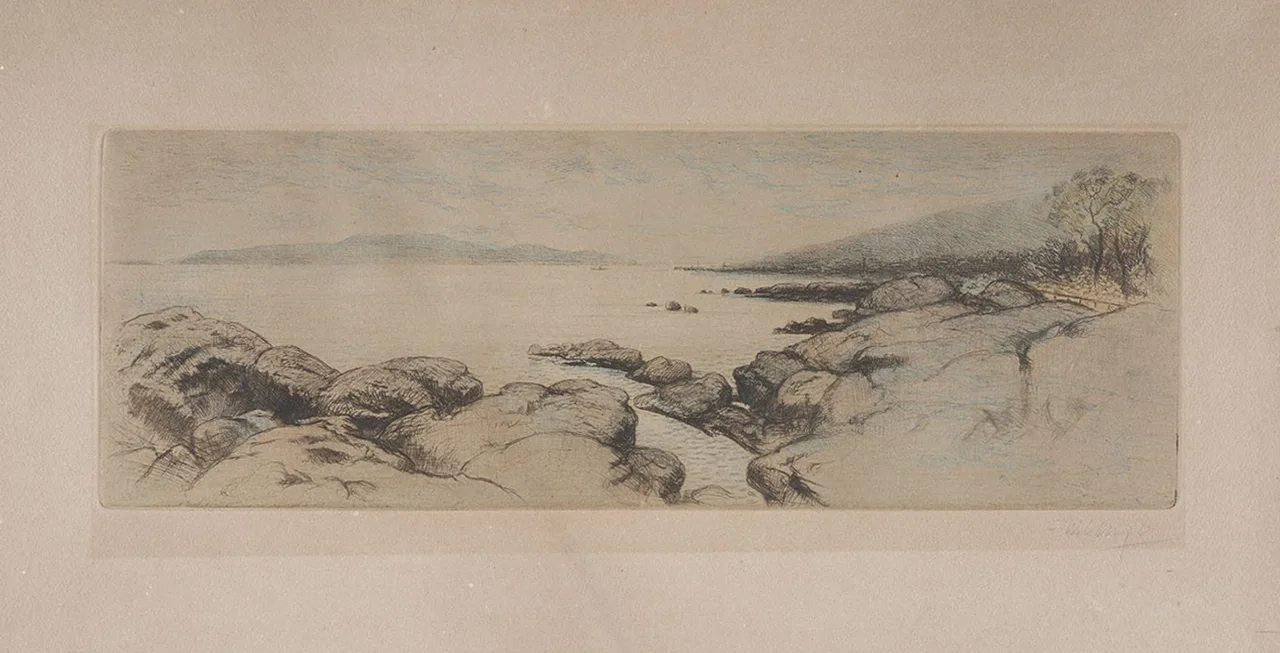
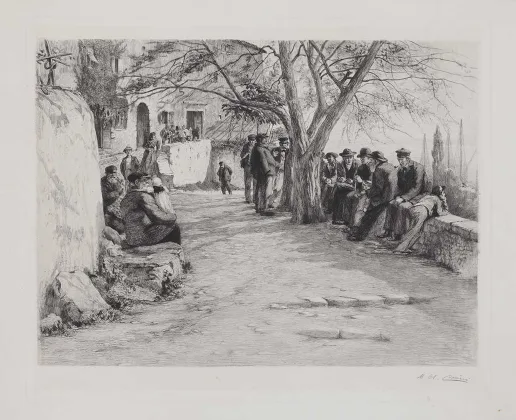
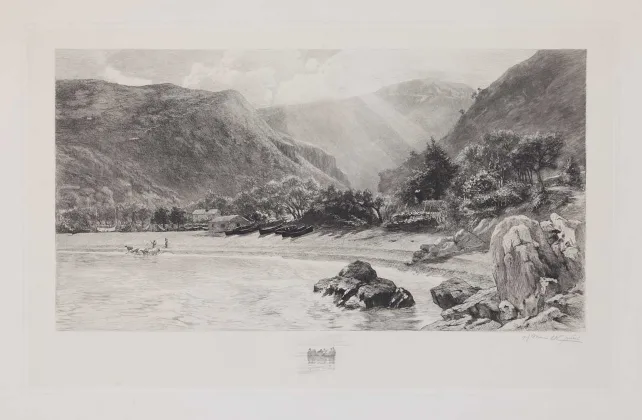
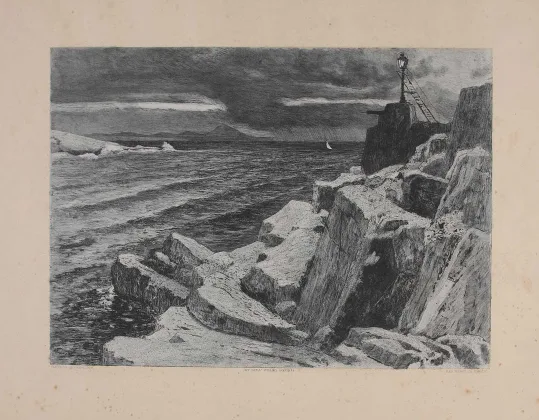
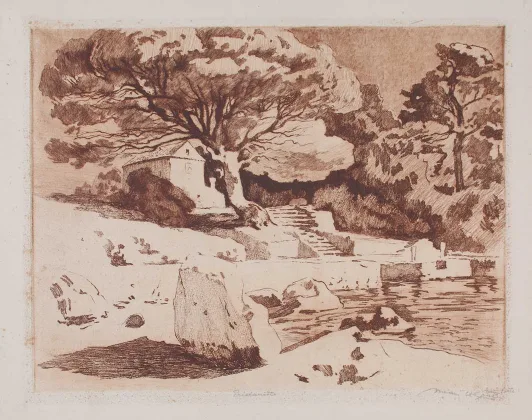
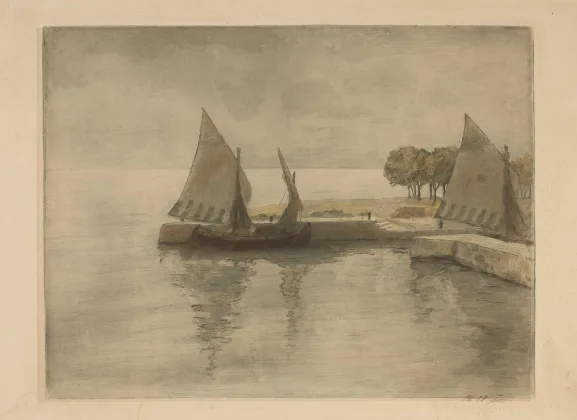
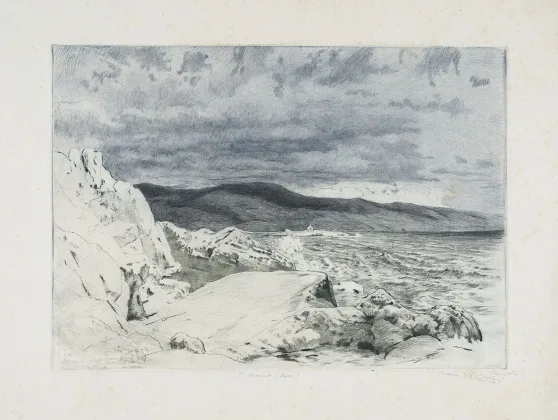
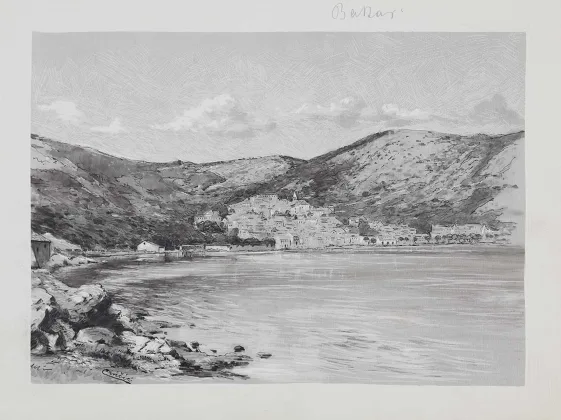
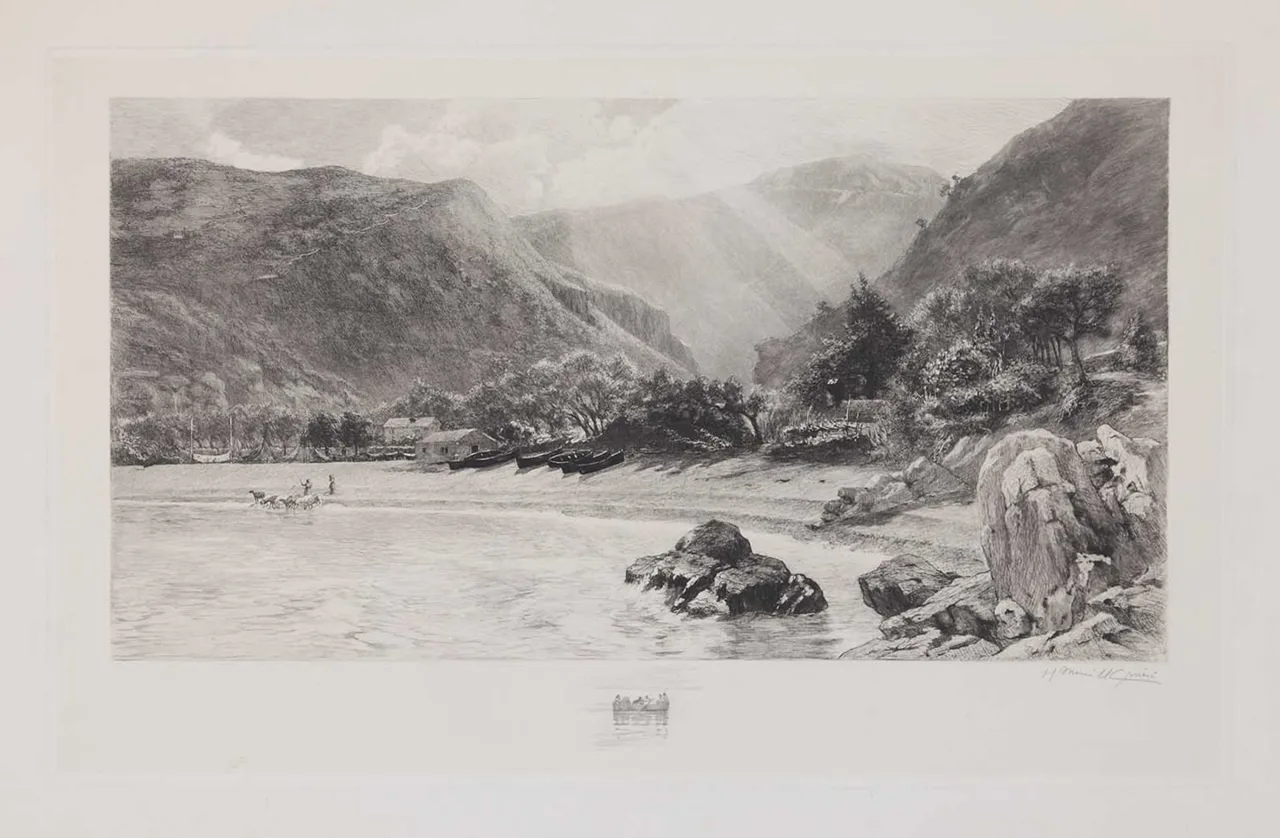
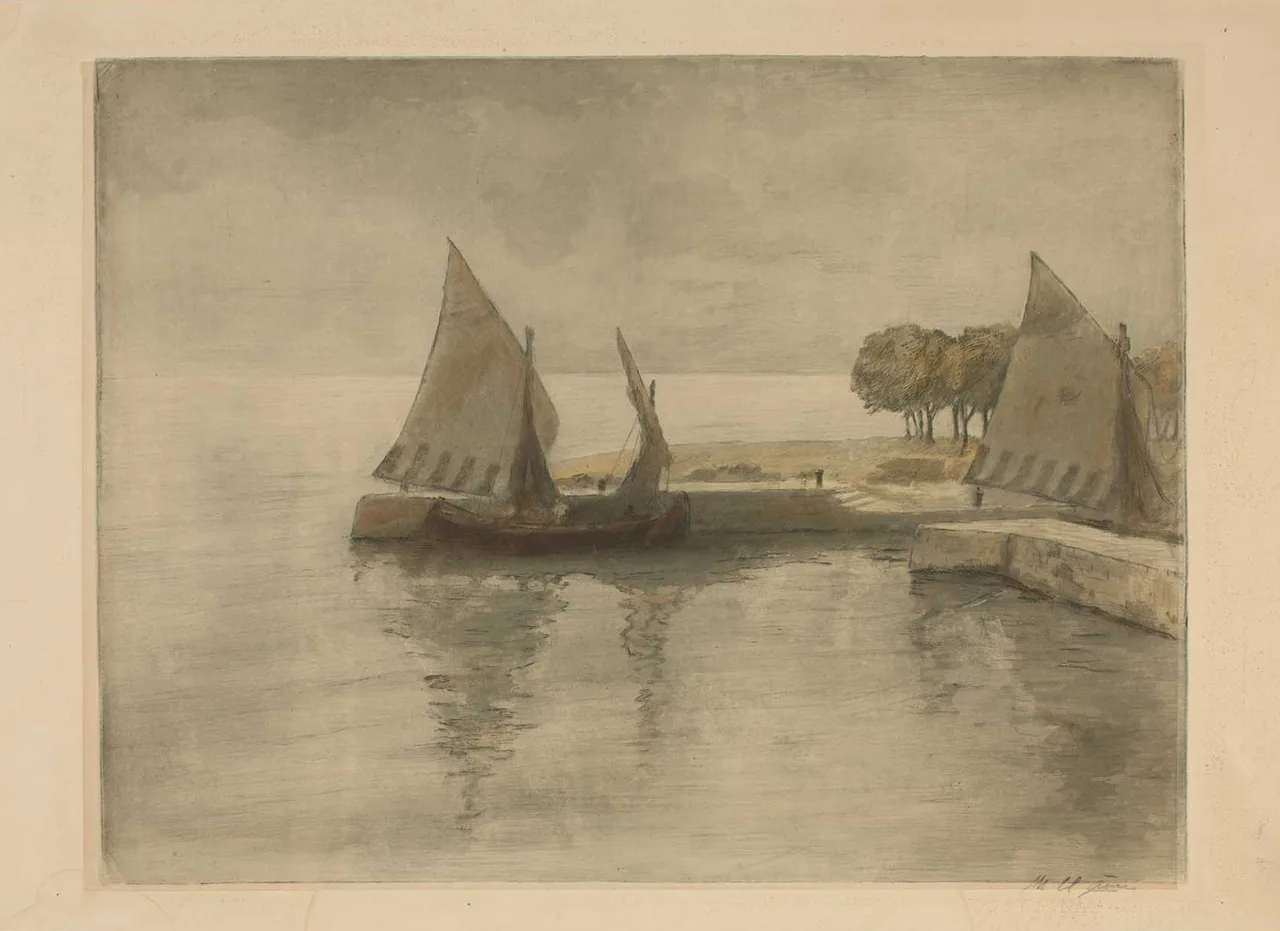
The founder and pioneer of Zagreb’s graphic tradition, Menci Clement Crnčić began his printmaking training at a two-year specialist course (1893/1894 – 1894/1895) at Special-Atelier für Radierkunst (Special Studio for the Art of Etching), under the professor of graphic arts William Unger (1837 – 1932) in Kunstgewerbeschule (School of Applied Arts) in Vienna. [5] Having noticed his extraordinary drawing talent, Crnčić is referred to graphic teacher William Unger by Iso Kršnjavi, chair of the Department for Religion and Education which granted him a scholarship for this residency. At that time, Unger was an unparalleled etcher and engraver, an esteemed professor of graphic arts, who conveyed the basics of the graphic craft to his talented student, acquired by replicating prints based on old masters, as well as his own inventions of mainly landscapes, portraits and genre scenes. A traditionalist approach to a painstaking motif processing, a harmonious composition tone typical of the late 19 th century and precision in the treatment of the graphic plate were evident in Unger’s etchings of sea vistas from the holdings of the Department of Prints and Drawings – Landungsplatz bei Villa Lovrana (inv. no. 1111), Fishermen in the Harbour (inv. no. 1110) and Marine Motif (inv. no. 4897), dating around 1894, a time when both teacher Unger and his disciple Crnčić sketched motifs for their prints together in Lovran. In 1894, due to the professor’s illness, Crnčić spent a few months with him in Lovran, where they painted together en plein air and made countless drawings, sketches and print studies, so “Unger indirectly, or possibly directly, aroused Crnčić’s interest in the sea, which became since then, until the end of his life, the most beloved theme of his art.“ [6] The fact that Crnčić already during training with Unger mastered the metier of etching, as well as deep, multi-layered simulations of the panoramic perspective, is confirmed by Füger’s 1896 gold medal for the best student piece – the etching Sunday Morning in Lovran – one of the “purest examples of realism in entire visual art in Croatia.“ [7]
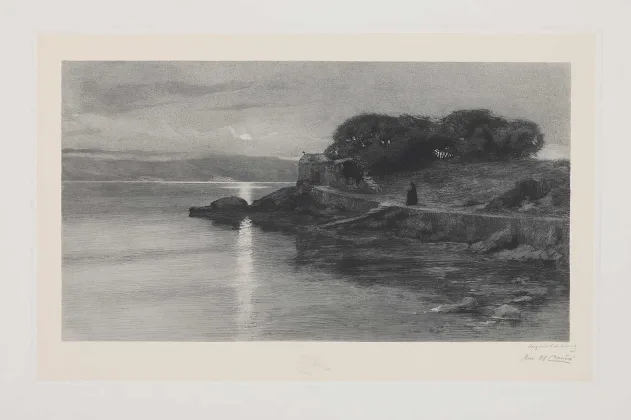
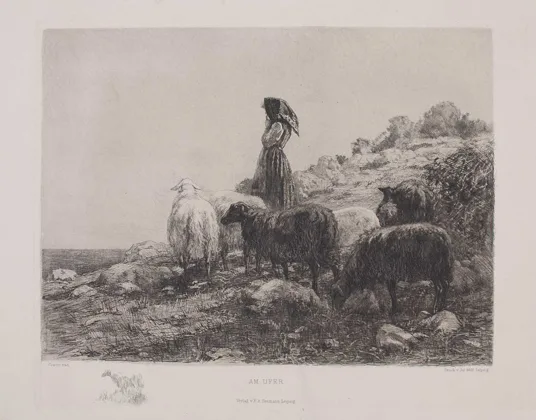
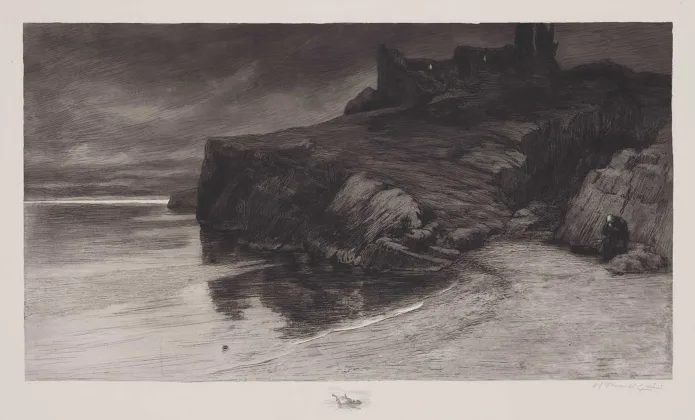
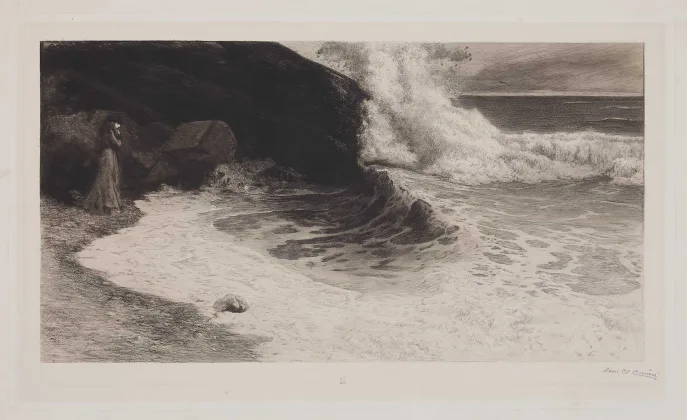
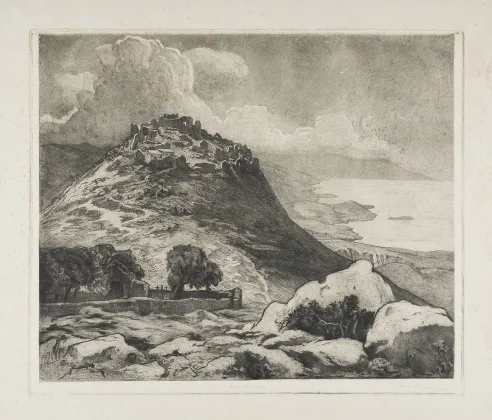
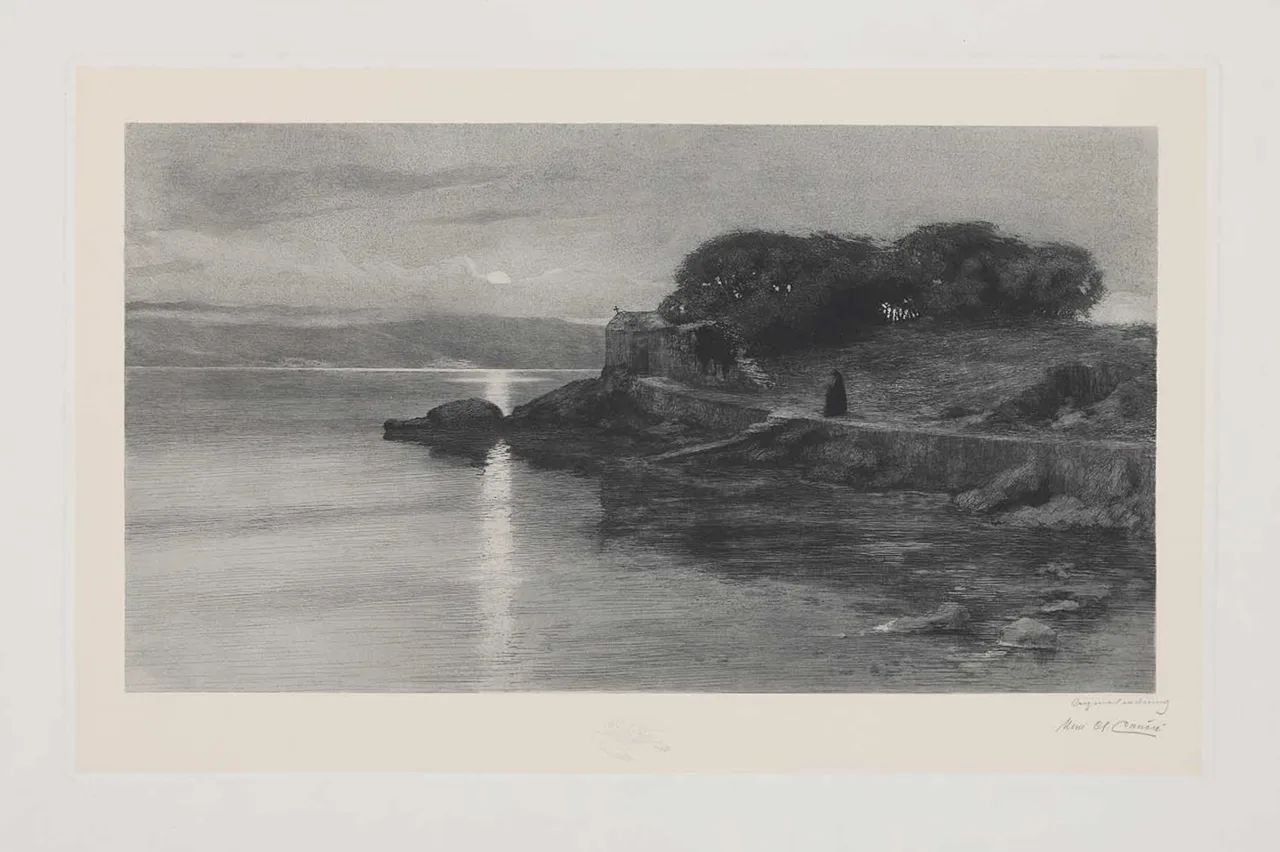
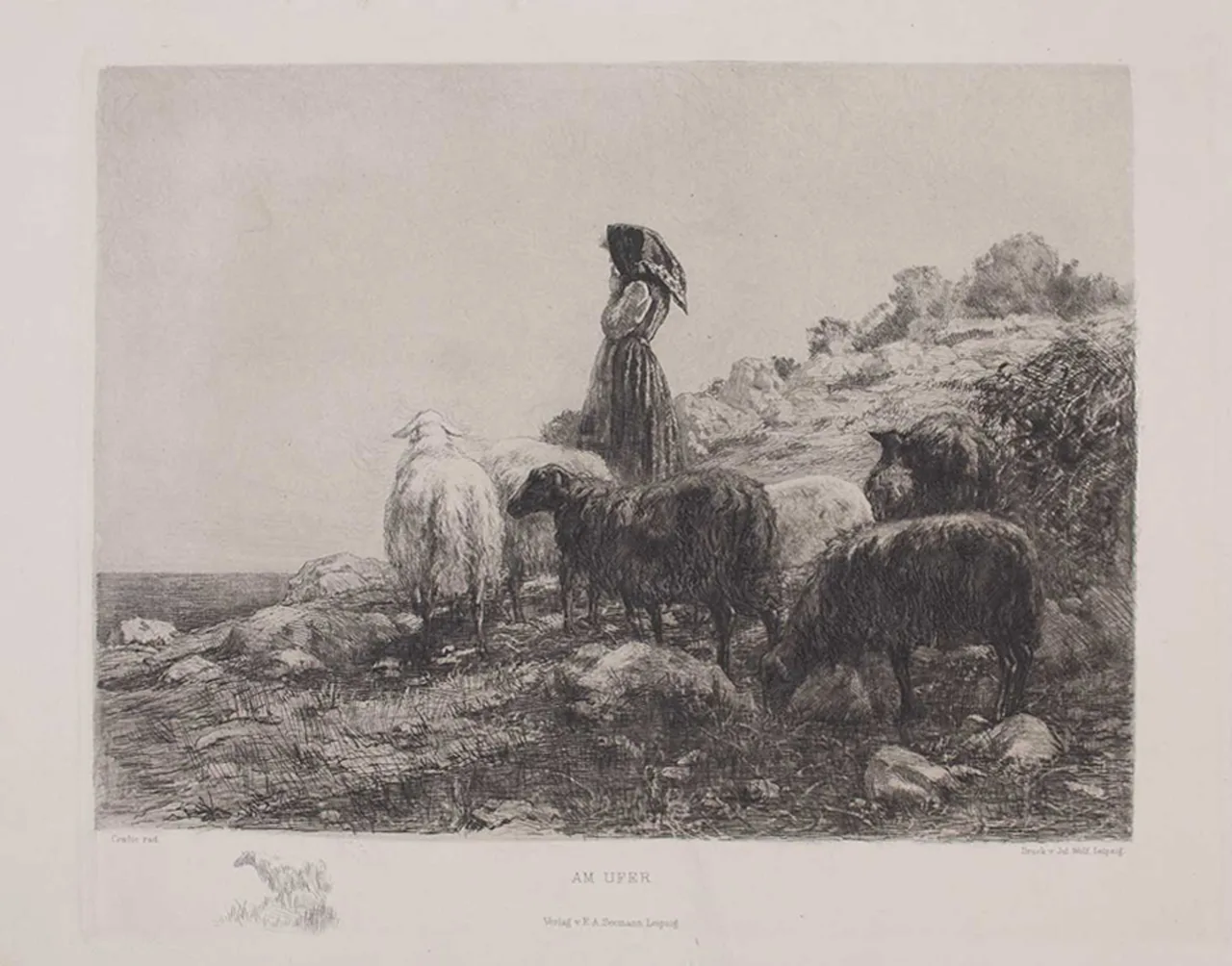
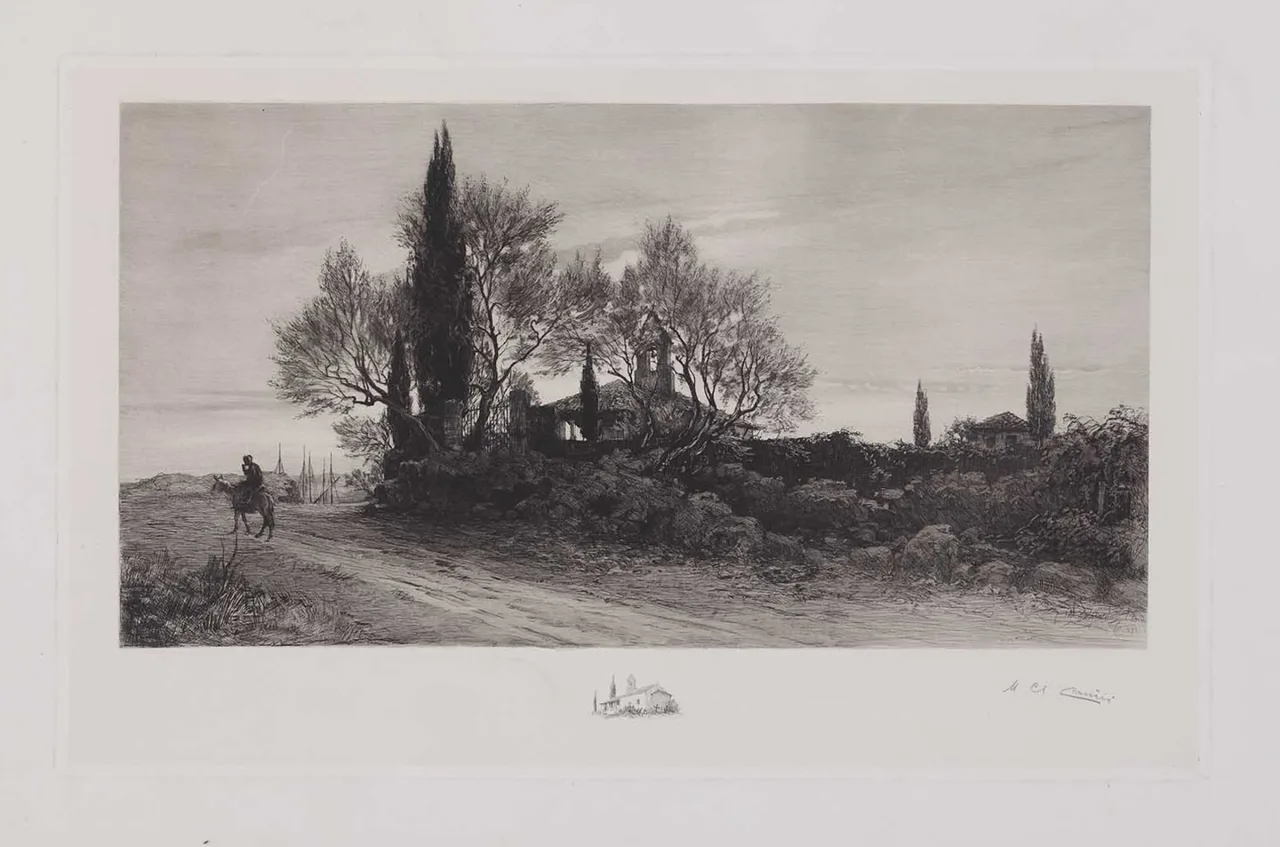
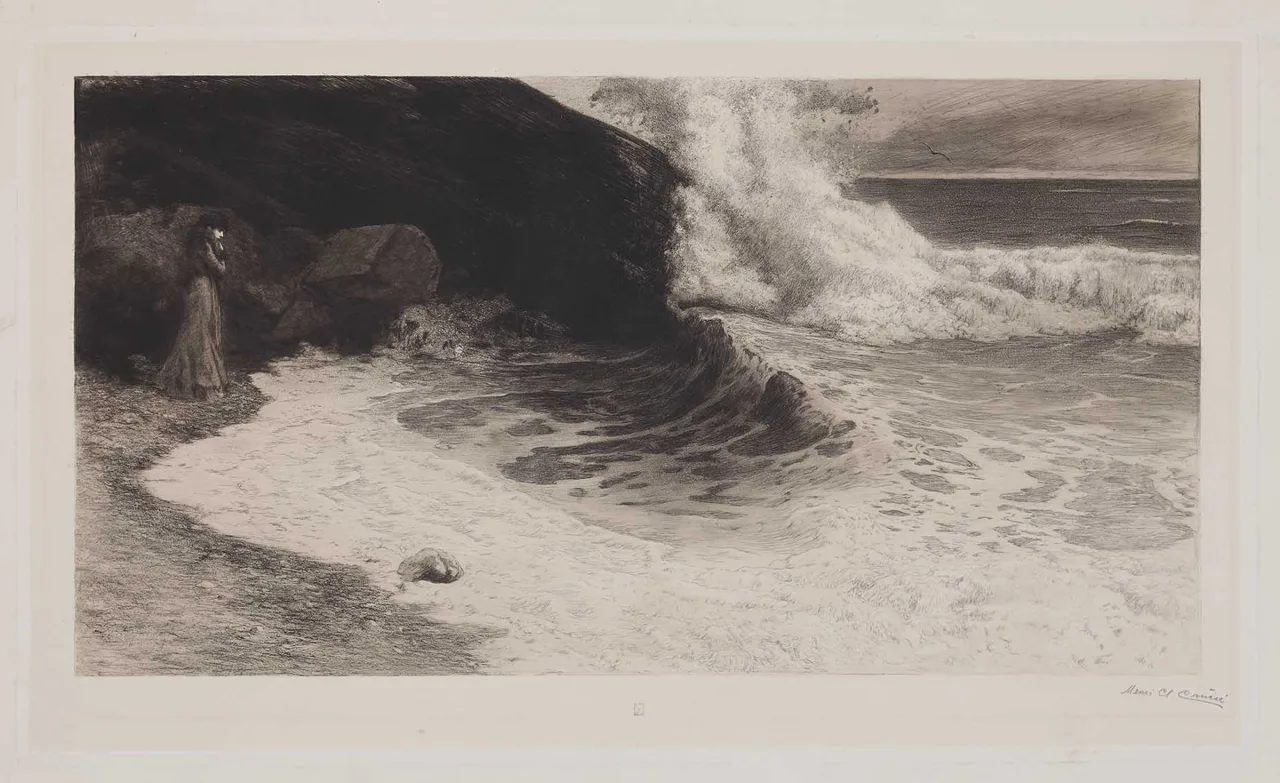
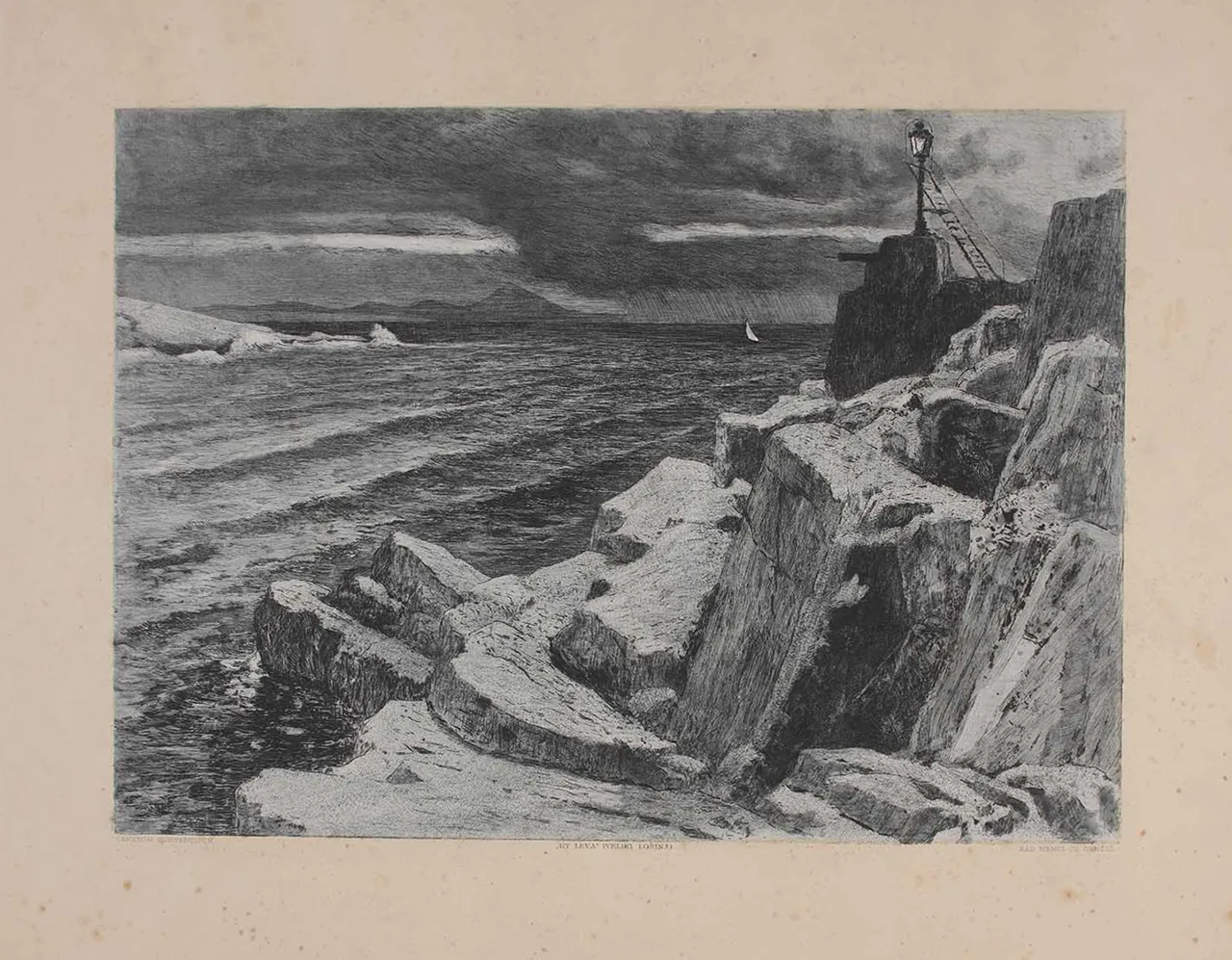
The conspicuous qualities of Crnčić’s early graphic vistas [8] are visible in the brilliantly mastered technique of academically solved realist compositions, fine lighter and darker gradations, the choice of motifs of crepuscular and melancholy atmosphere, symbolist content, occasionally taken from literature, [9] and a composed stroke of a dense line structure (Twilight, Am Ufer, Medveja, The Last Offspring, Lonely, Evening Bells). For these early minute and technically impeccable graphic vistas, Ljubo Babić, in his review of Crnčić’s graphic work, says they were inspired by “Unger’s suggestion”, noticing in the works around 1898 a tendency “towards width and a growing format” of the graphic sheet and pointing out that Crnčić likes “motifs with faraway perspectives,” i.e. “panoramic scenes.“ [10] In December 1902, he had a solo exhibition in the Artin Salon in Vienna, and his success earned him in early 1903 an Imperial Grant amounting to 2000 crowns for a series of etchings from Hrvatsko primorje and Dalmatia. [11] From this series we should underline the outstanding etching Cape Leva / Veliki Lošinj, a dramatically tinged piece of a powerful signature and contrasting tonal units.
A review of the graphic production which in our selection from the holdings spans the period between 1895 and 1903 would not be complete without mentioning certain procedural specifics of the medium, adopted at Unger’s. More recent conservational research [12] conducted on the examples of Crnčić’s prints from the holdings of the Department of Prints and Drawings and in consultation with relevant literature shed light on combined deep print techniques Crnčić used in etching a copper or zinc plate and in printing it – etching, drypoint, aquatint, combined with mechanical methods of tool processing (etching needles, roulettes). In the prints from the early stage Twilight, Sunday Morning in Lovran, Medveja, The Last Offspring, Lonely, Evening Bells and sporadically later (Bakač Tower, Bragozzi on the Pier) the chine-collé or chine apliqué, [13] printing methods were notices, specific for printing the plate onto a thin oriental/Chinese paper which is applied with starch glue onto a thicker, secondary one; in the process, the more shallow lines on the chine / thin Chinese paper become visibly clearer, i.e. sharper than those printed on the other carrier paper [14] creating technically clear and evocative line etchings.
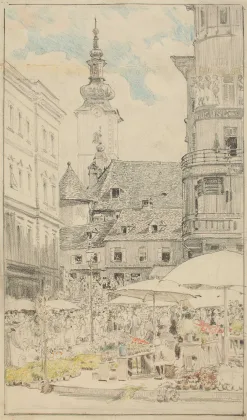
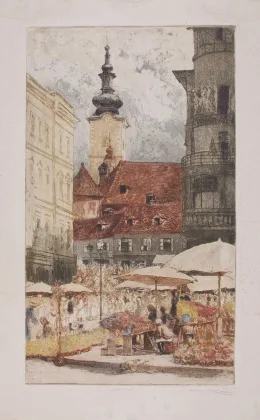
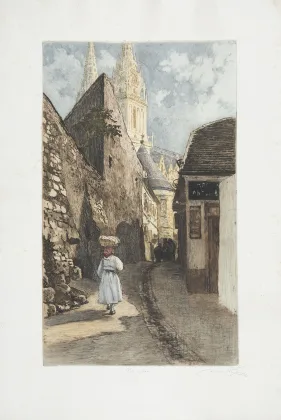
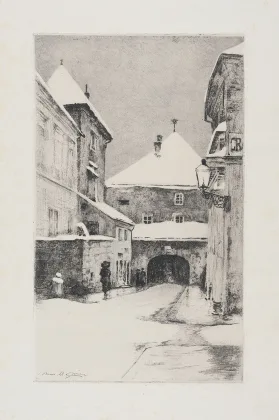
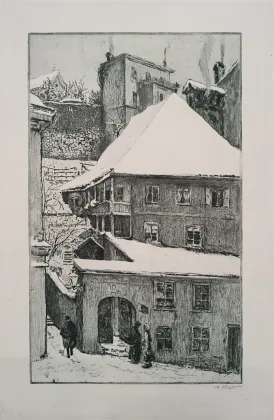
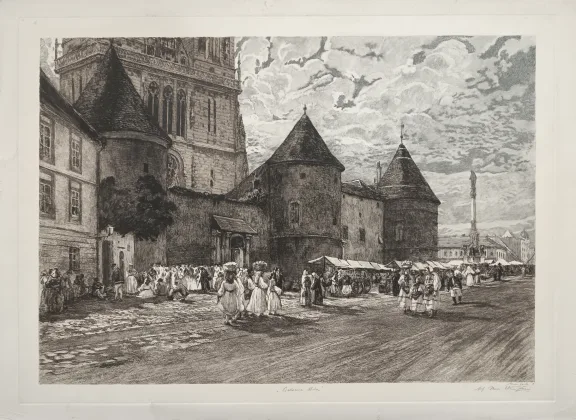
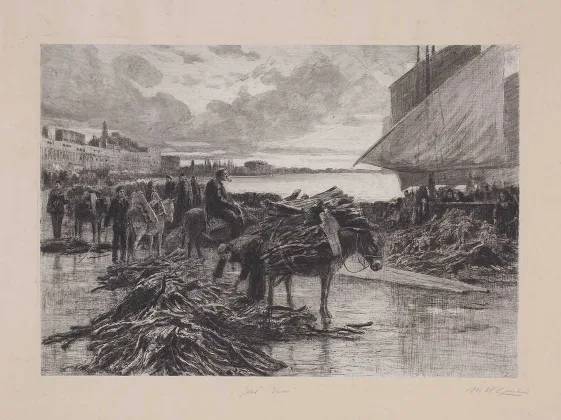
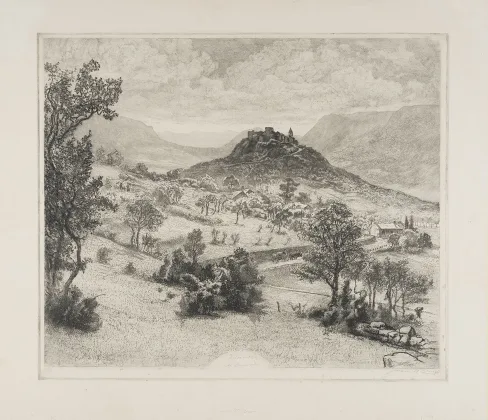
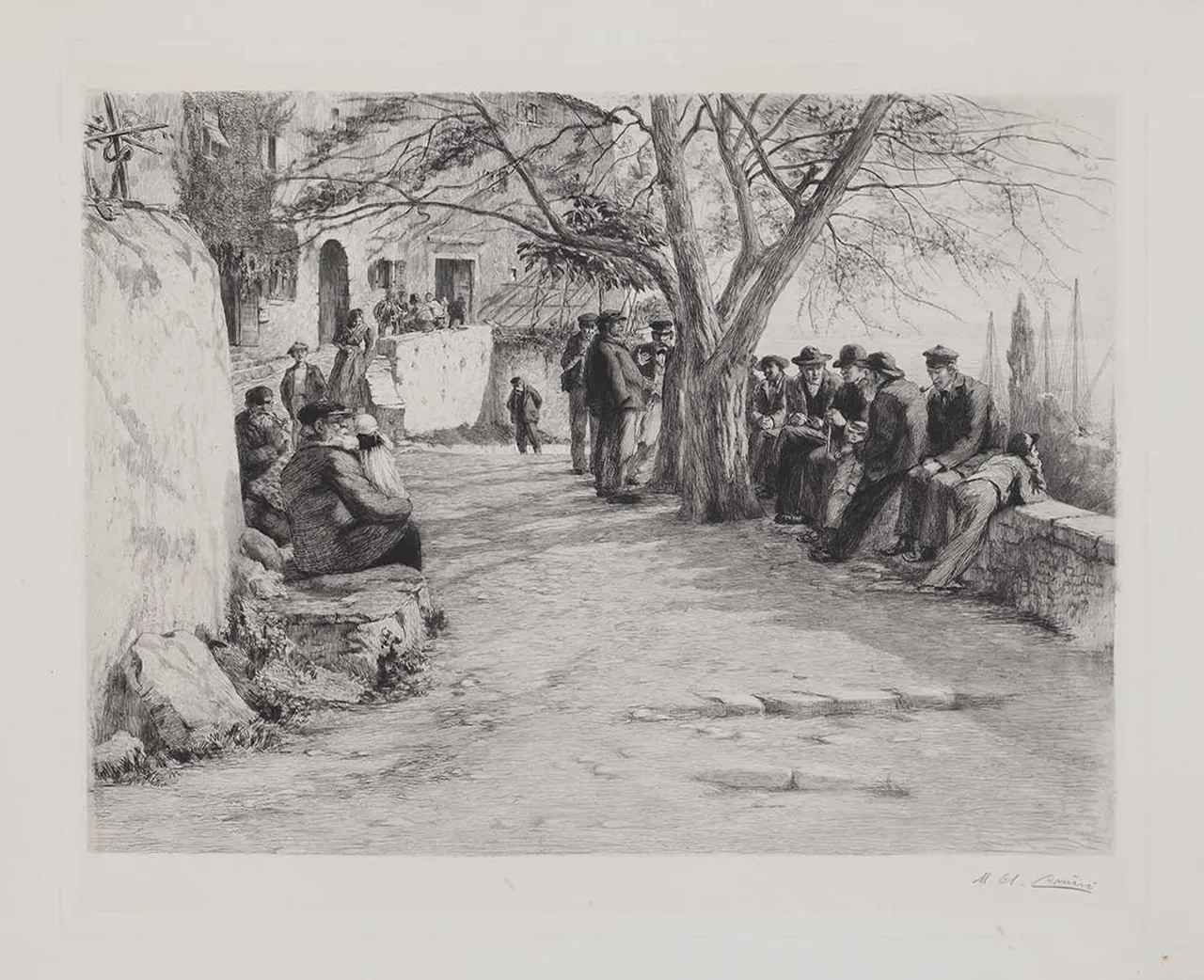
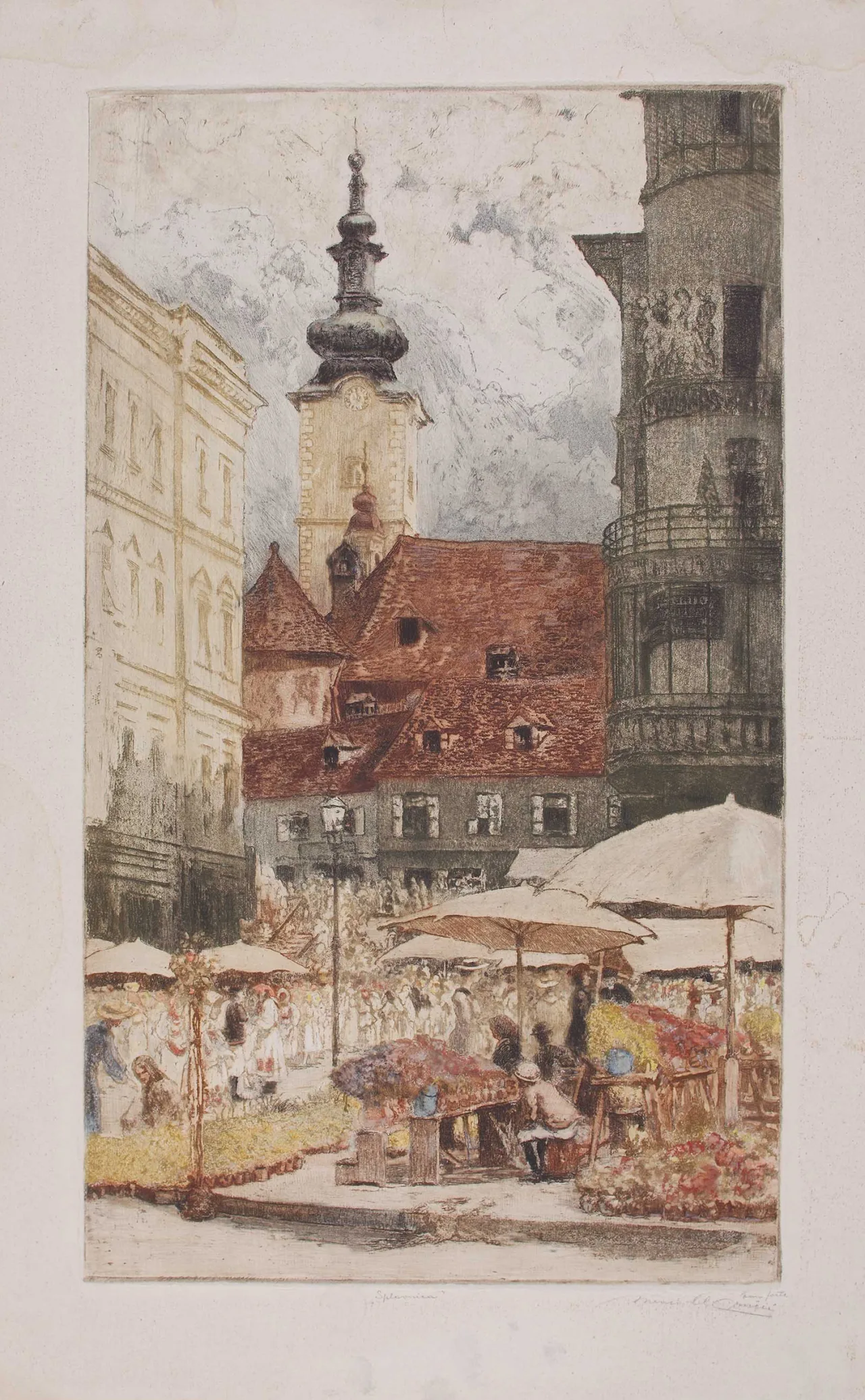
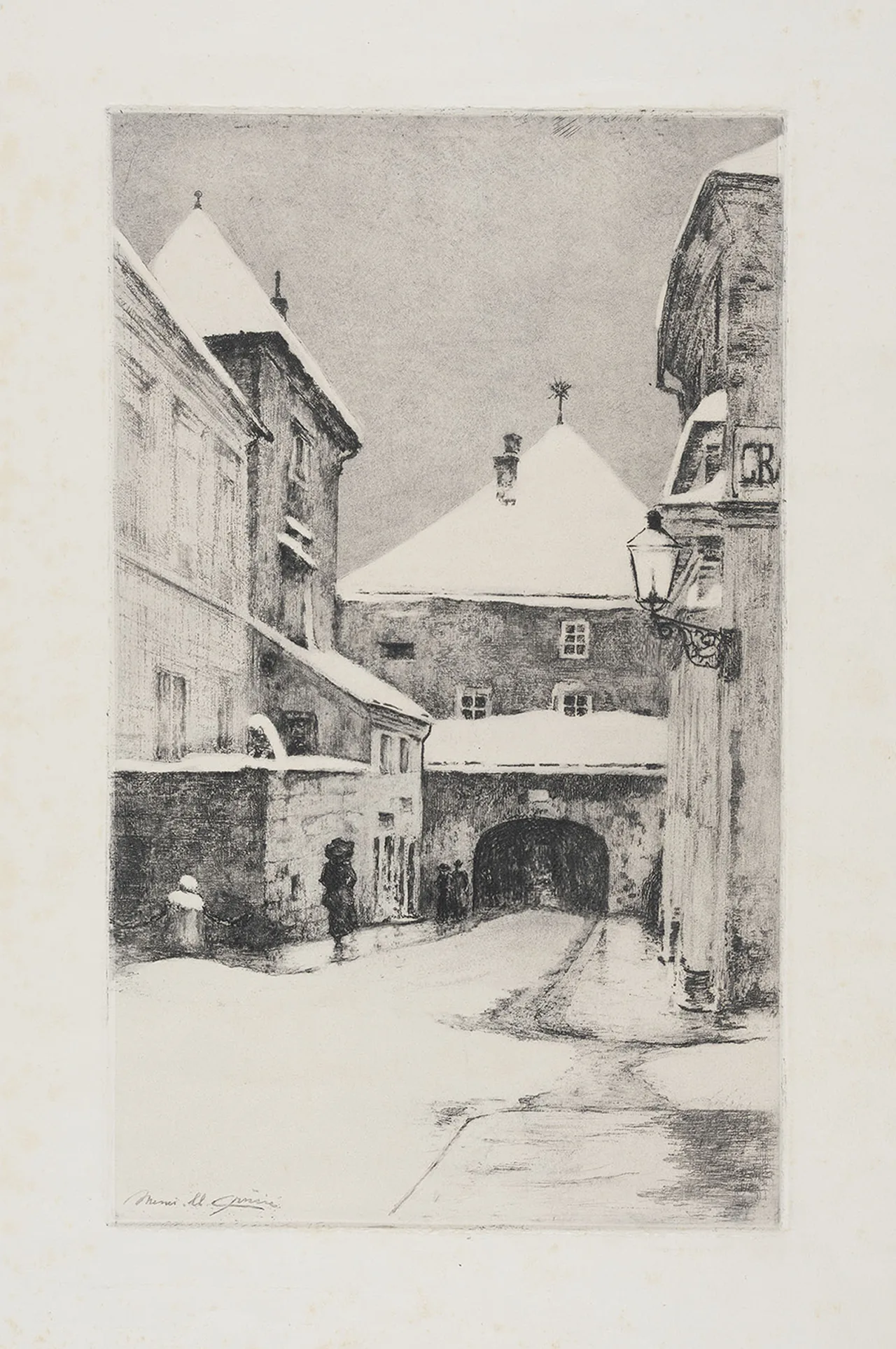
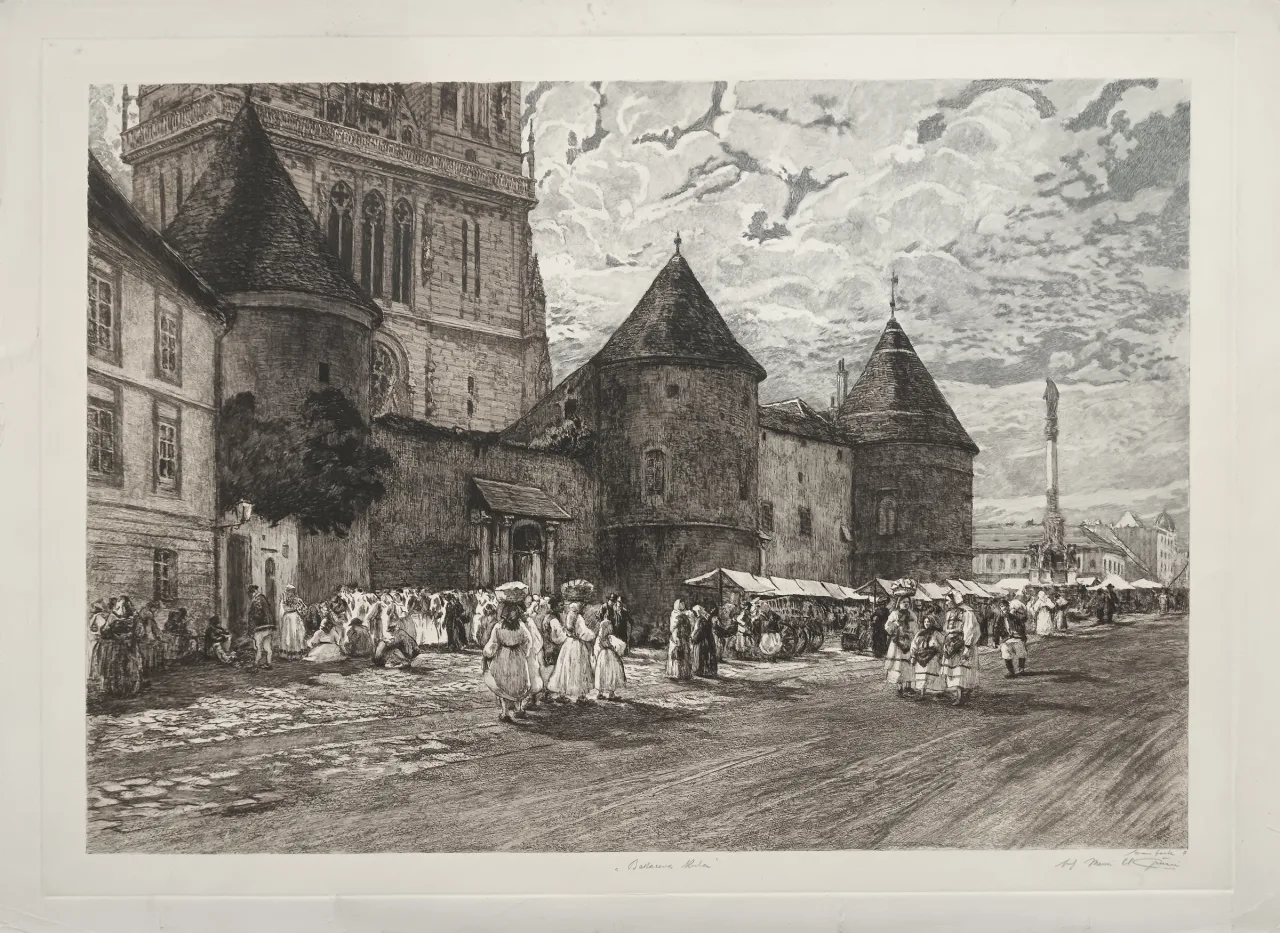
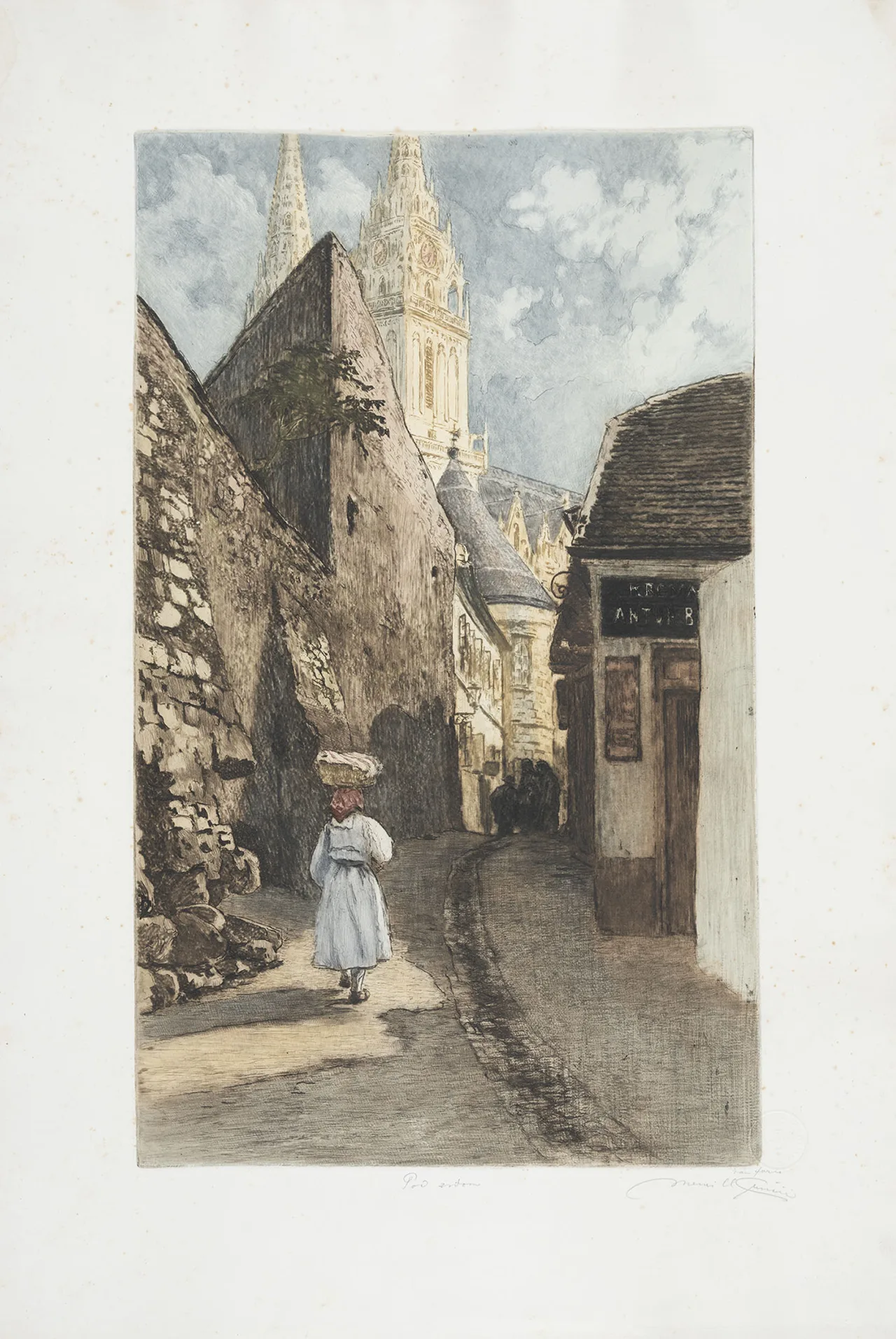
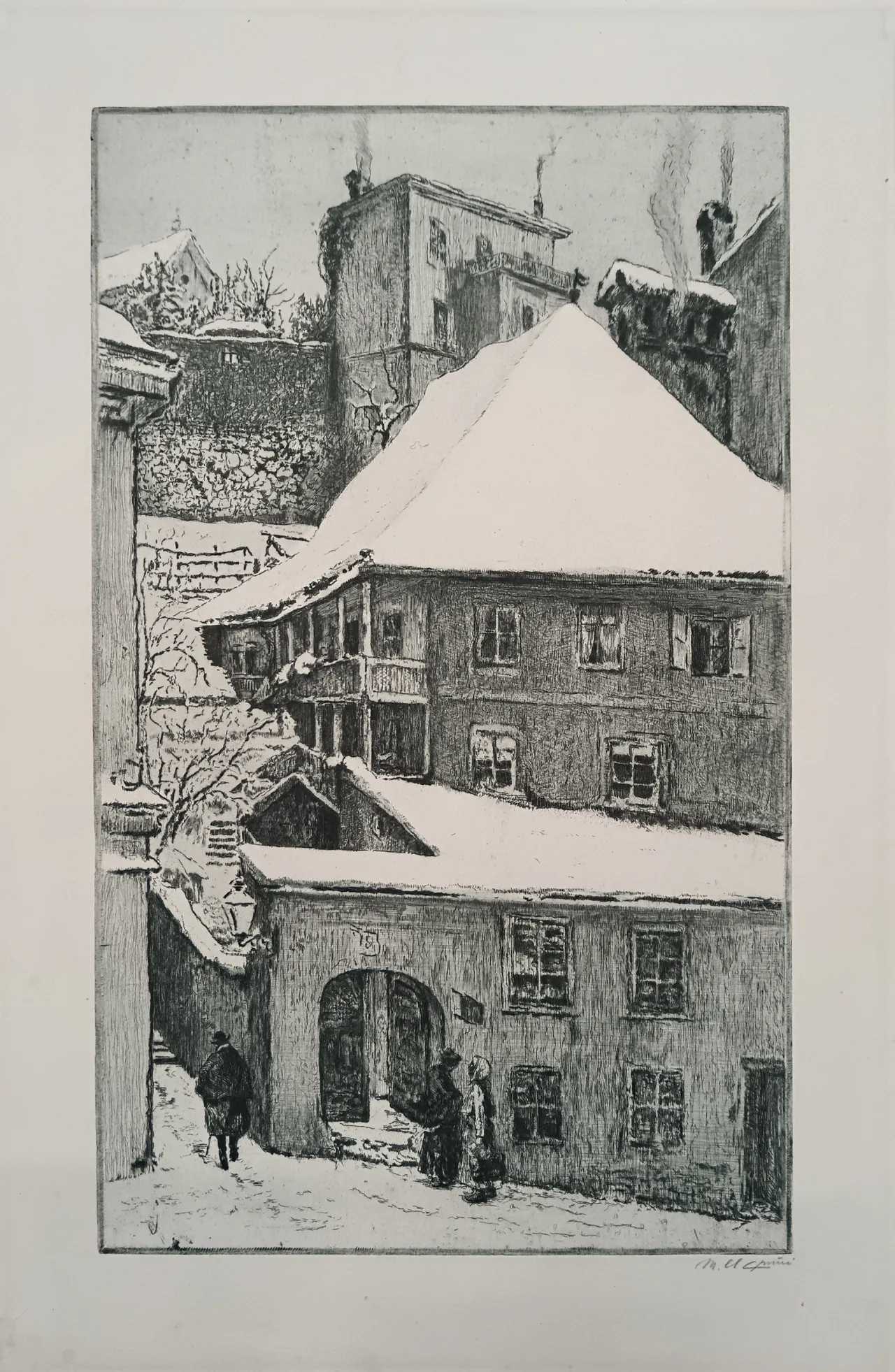
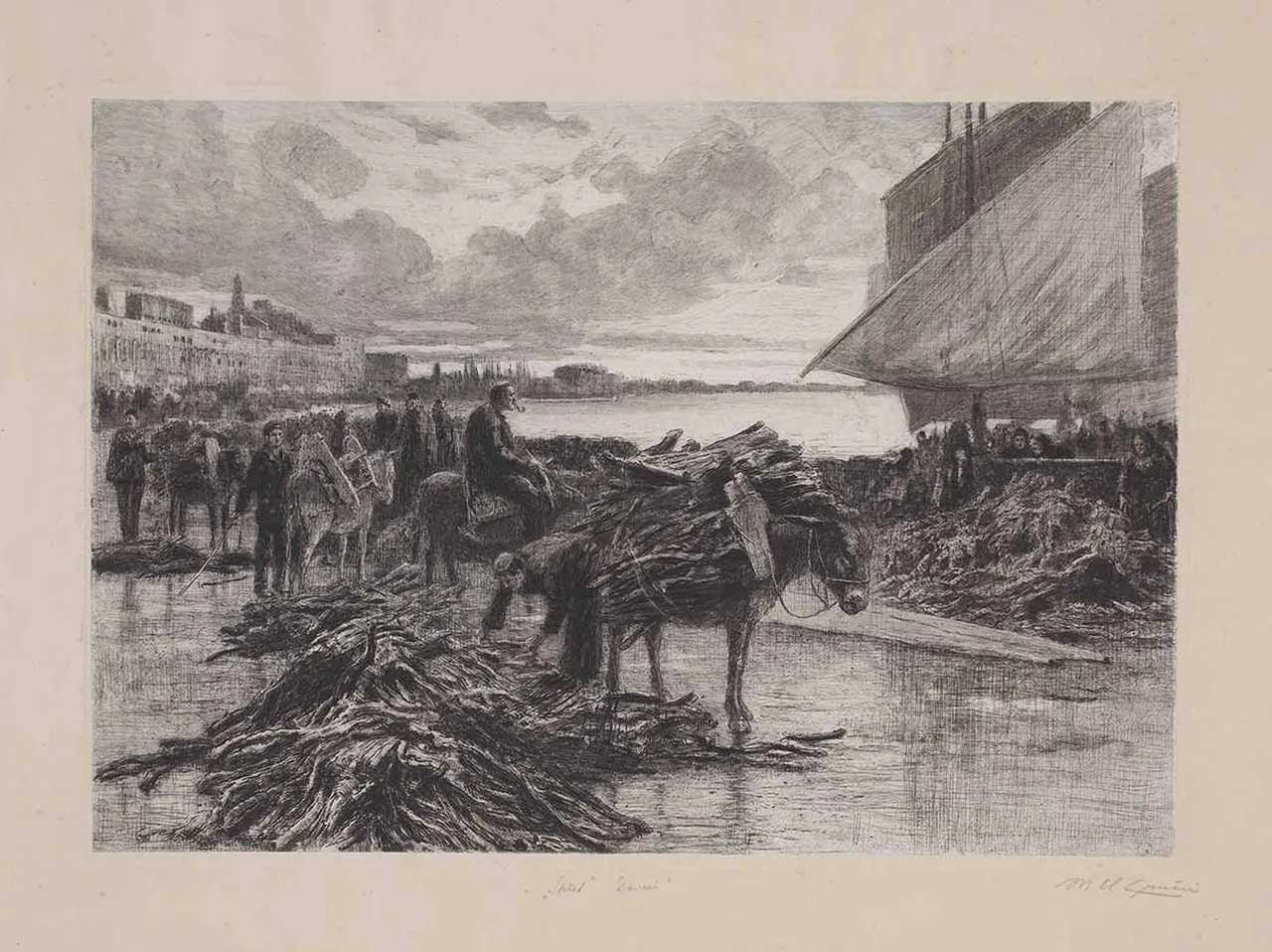
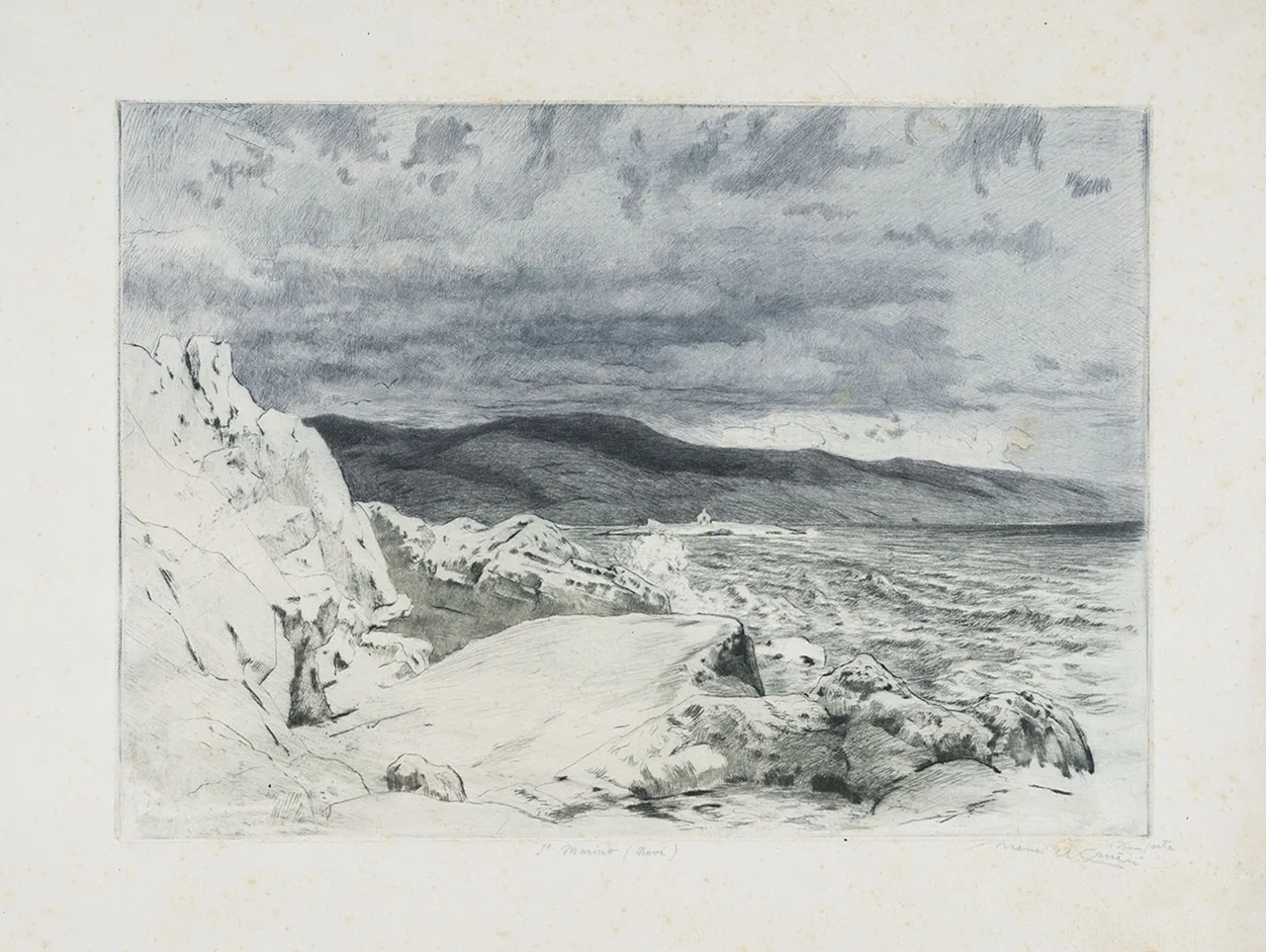
In his later works of the so-called second stage, mainly depicting Zagreb motifs around 1910, Crnčić neglected the Ungerian literal documentary quality of motifs, the stroke became more casual and negligent, and he expanded the achromatic tone scale (The Stone Gate, Mesnička Street in Winter and the somewhat later Split Woodmen and Port) with a richer array of colours. Zagreb’s impressions of the bustling city and colourful national costumes (Splavnica, Pod zidom, Bakač Tower) are achieved by multicoloured prints from one plate, on which paint is applied with the help of a textile or leather tampon, à la poupée technique; [15] a specific trait of one of the methods Crnčić used in grating the larger-scale etchings, which Hozo technically highlighted as a procedure Crnčić particularly brought to perfection based on Unger’s procedures. [16] Writing about these graphic vistas around 1910, Babić points out the “impressionist atmospheric glimmer of the sun and light”, claiming that Crnčić achieved this atmospheric simulation using even dentistry tools to, in addition chemical etching, treat the plate mechanically, which was not always a successful solution because these parts of the prints resulted blurred. [17] Božidar Gagro mentions the cityscape motifs as an example of “the prototype of modern prints”, describing Crnčić as the first among modern “graphic artists-travellers and flaneurs who travel the country in the wake of Zasche and Hötzendorf, registering urban and landscape motifs.” [18] On his study tours across Primorje and Dalmatia, which he organised for his students at the Academy, around 1914 a flickering impression of restless hatchings San Marino / Novi was made. The creativity of these years and the ones to follow, with the finest graphic achievements in the 1920s, epitomise the adopted procedural formulas and rules of the printmaking medium, which he subsequently specialised (1913-1914) at arts and crafts schools and Viennese institutes for etching and lithography and print mills in Munich and Berlin. [19]
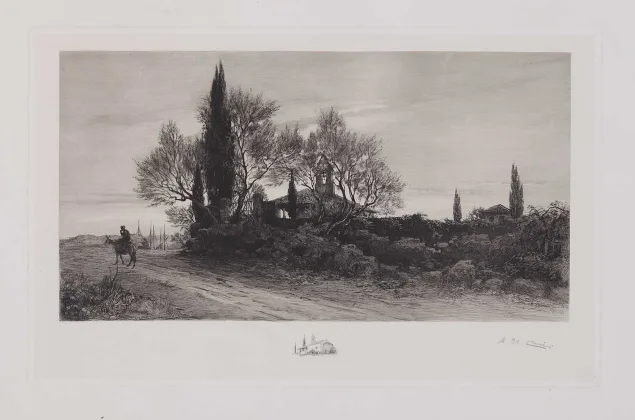
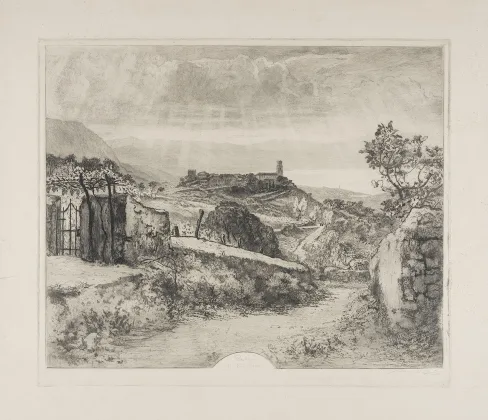
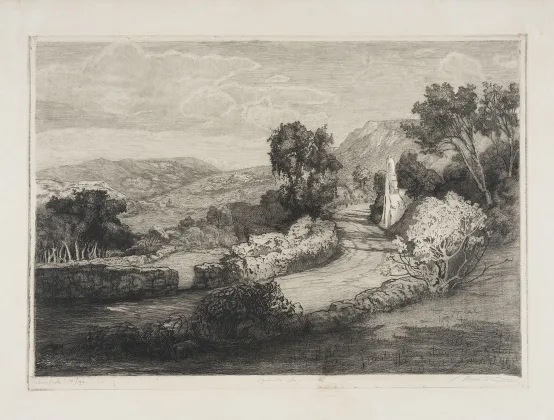
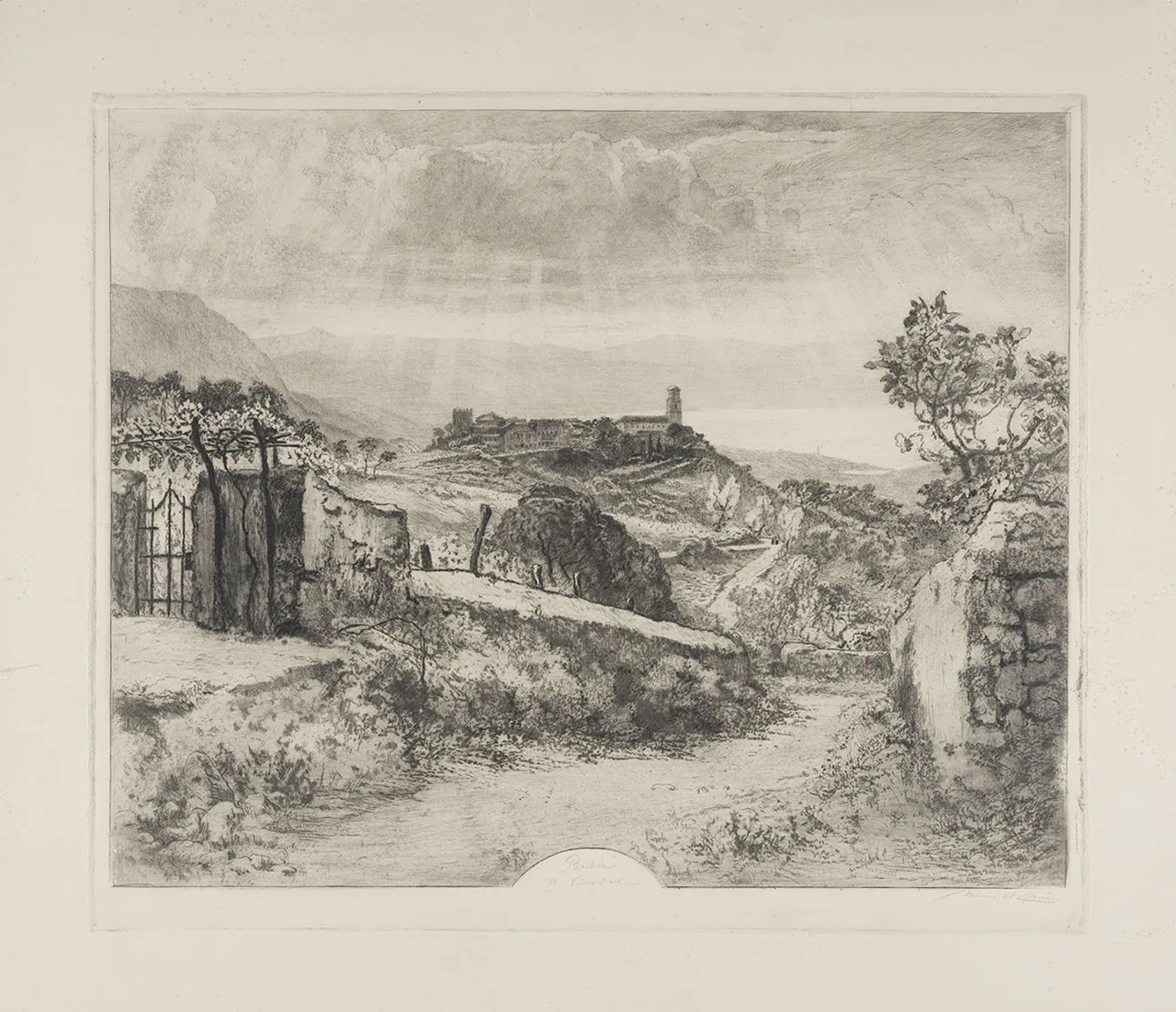
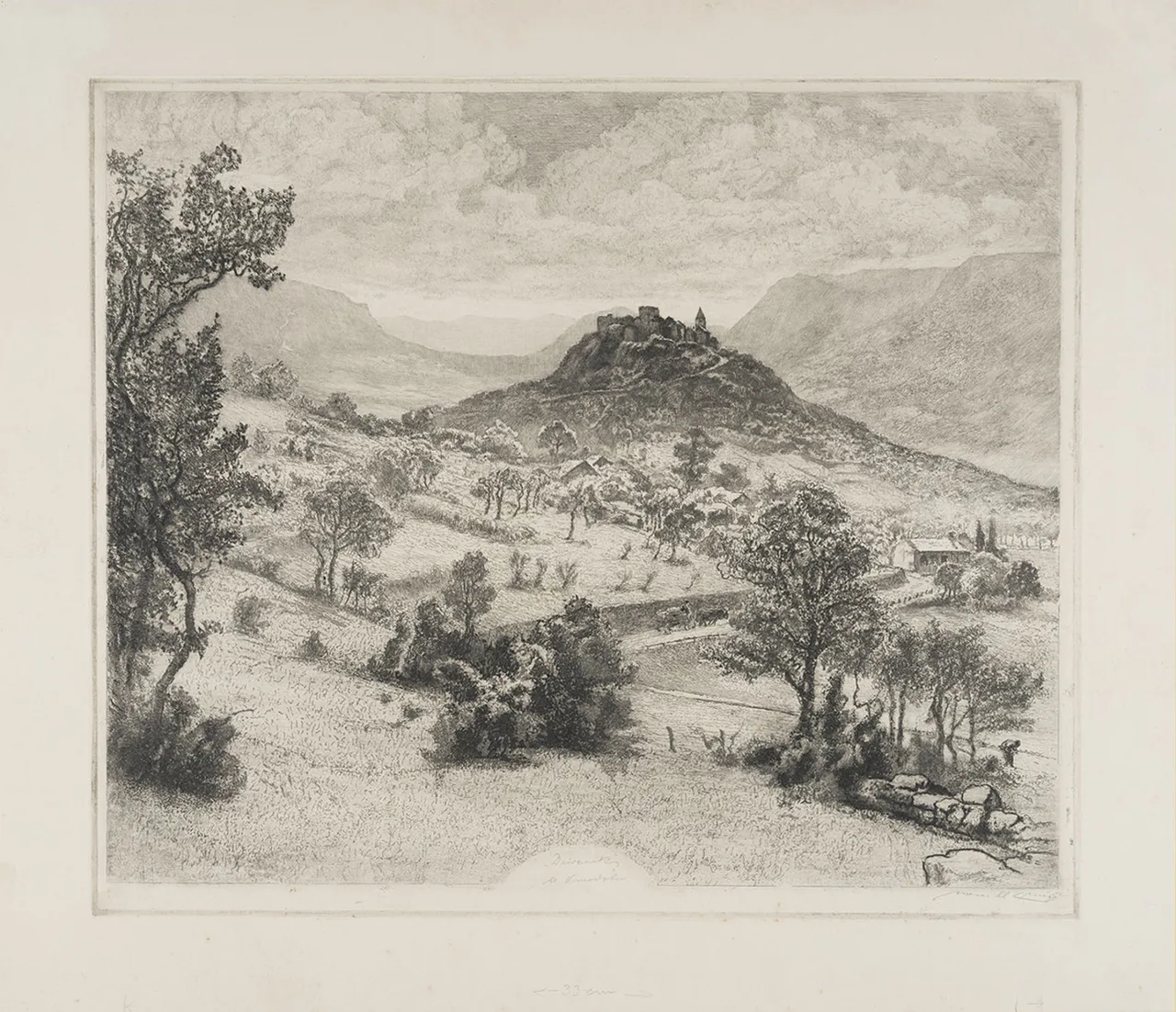
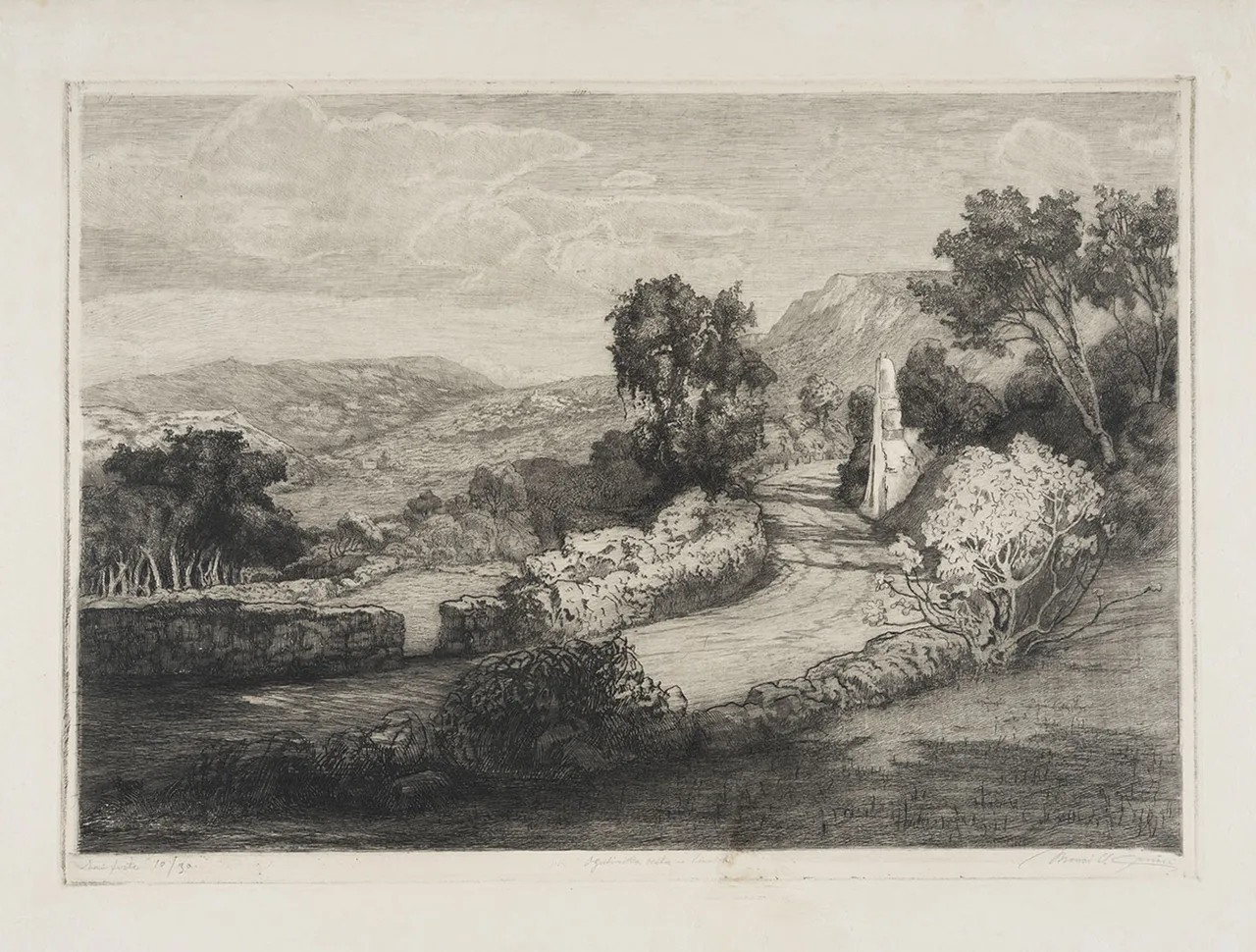
In the third creative stage of post-war prints (1920-1925), the peak of his professional entirety, Crnčić returns and fully commits to his greatest obsession – landscape and its luminous sensations, a composed linearism of visually clear and technically brilliant masterful relief etchings in combination of drypoint and aquatint, printed on large sheet formats depicting vast expanses and topoi of seaside landscape (Bribir Vinodolski, Drivenik in Vinodol, Ogulin Road in Vinodol, Old Ledenica).
Without pretensions to encompass the comprehensiveness of Crnčić’s rich creative work and not addressing his painting – presented at the recent retrospective exhibition in Klovićevi dvori Gallery, [20] from the curatorial point of view we strive to present the finest drawings precisely from the holdings of the Department of Prints and Drawings since we keep around a hundred and fifty of Crnčić’s drawings. Presenting the carefully selected works from his drawing anthology kept in the 20 th and 21 st Century Collection, we accentuate the pieces that define him as a skilful and focused draftsman – a pioneer of landscape themes in our country.
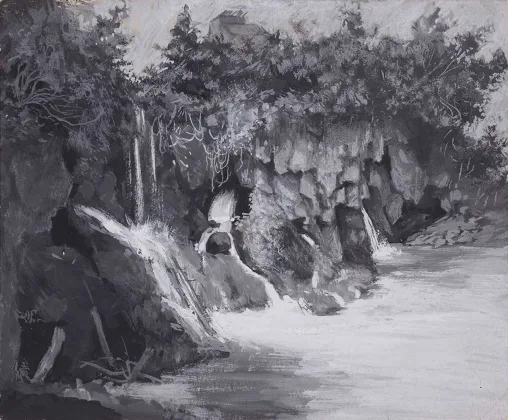
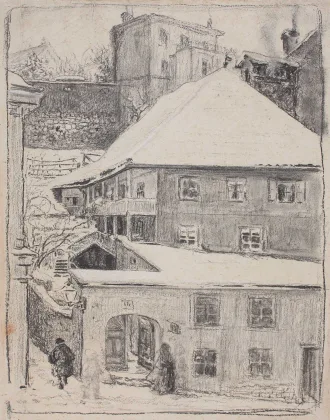
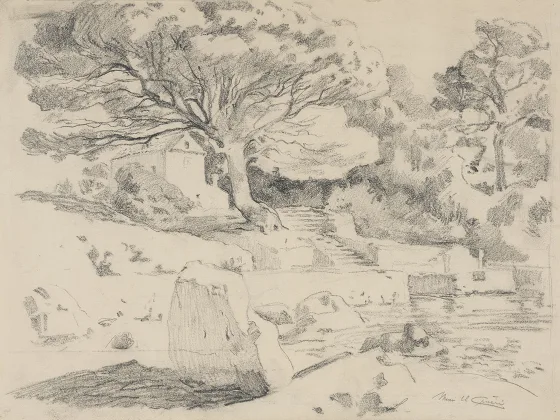
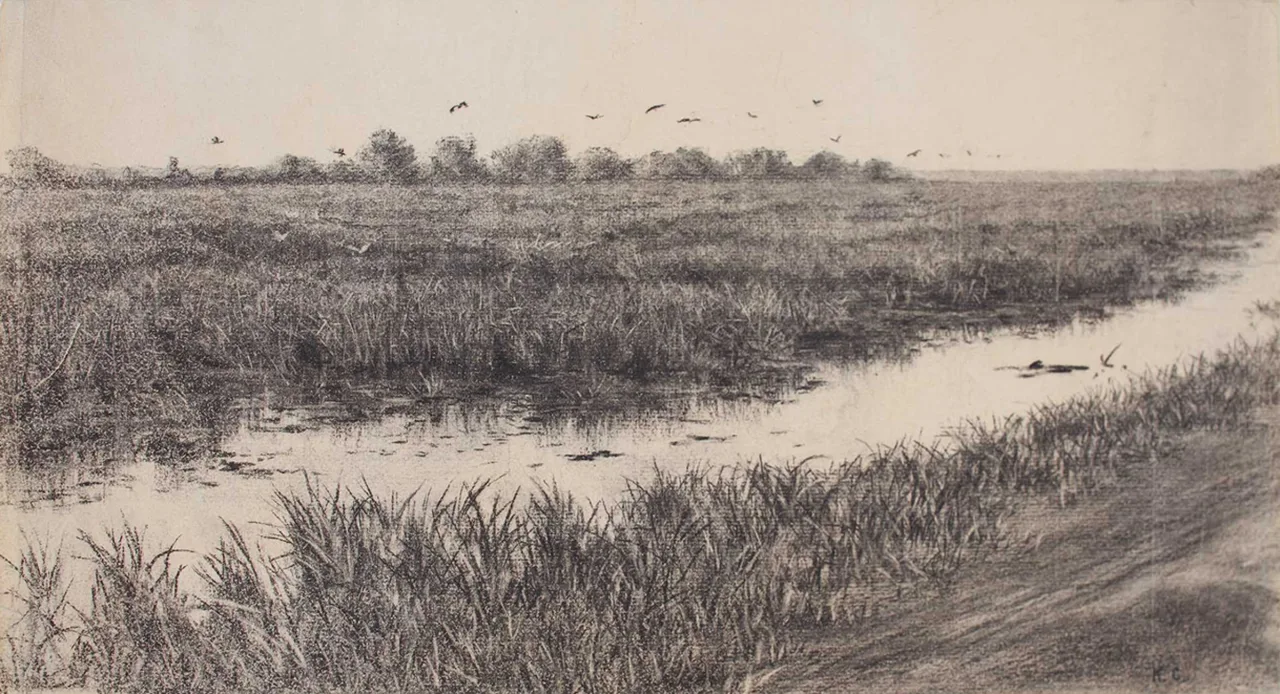
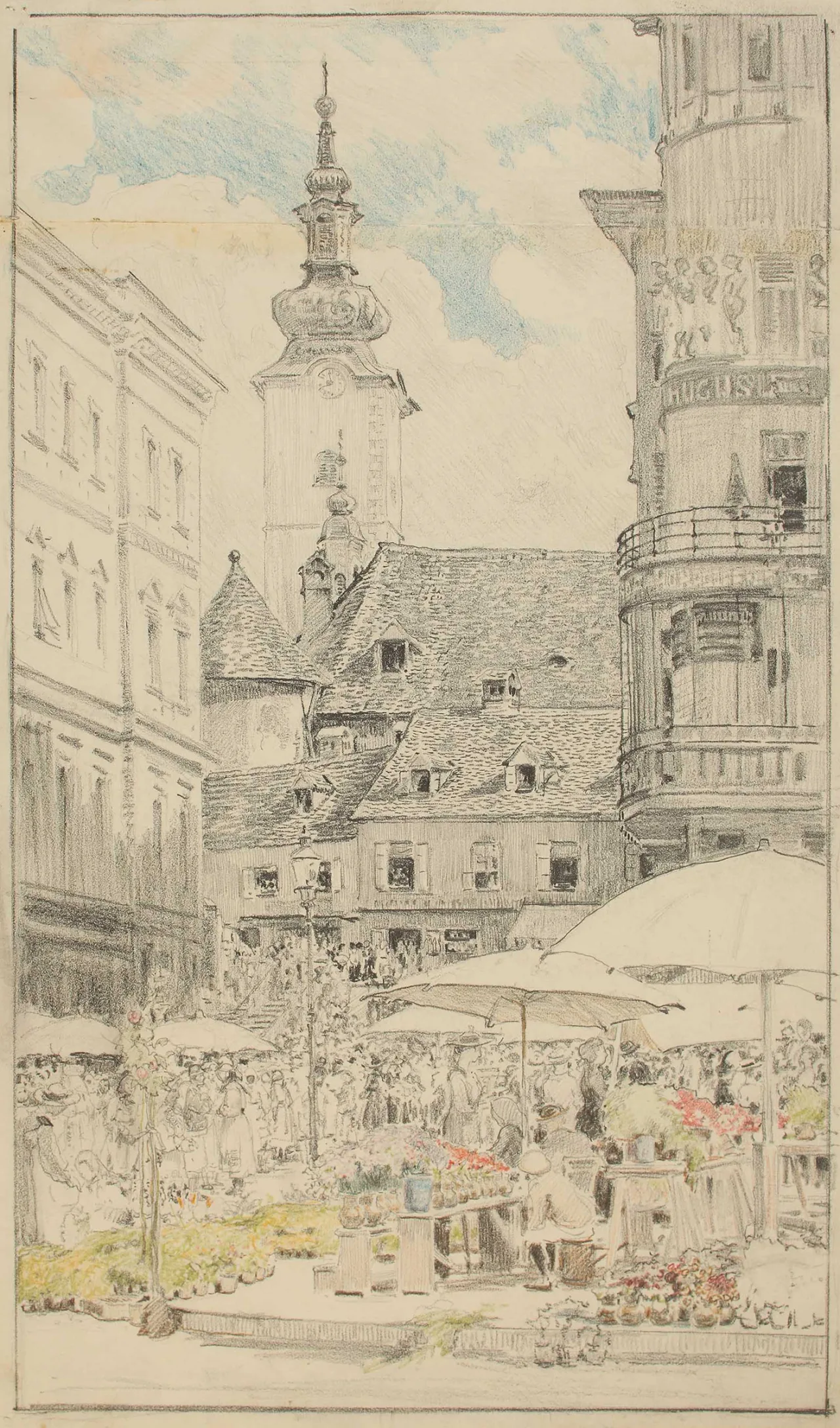
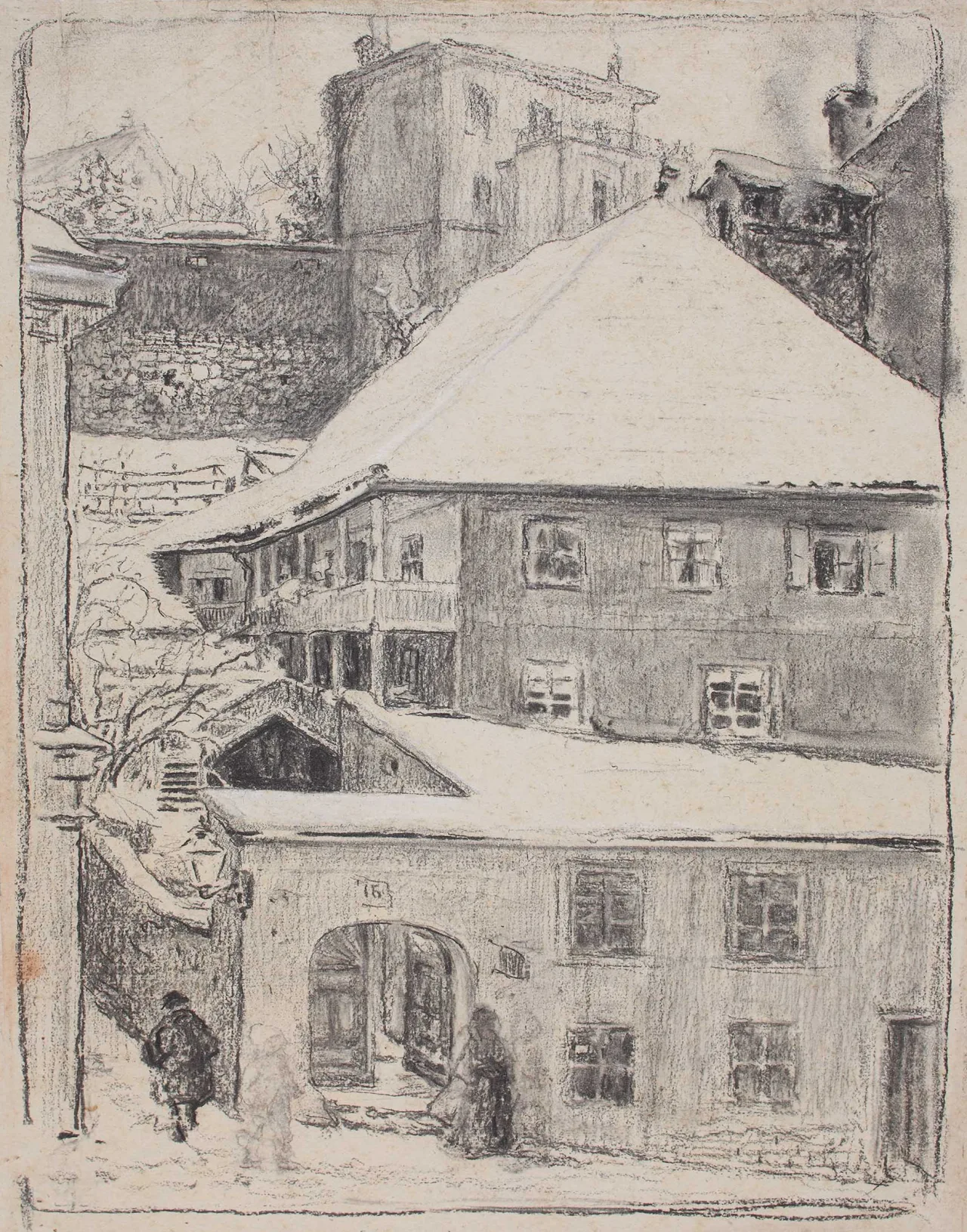
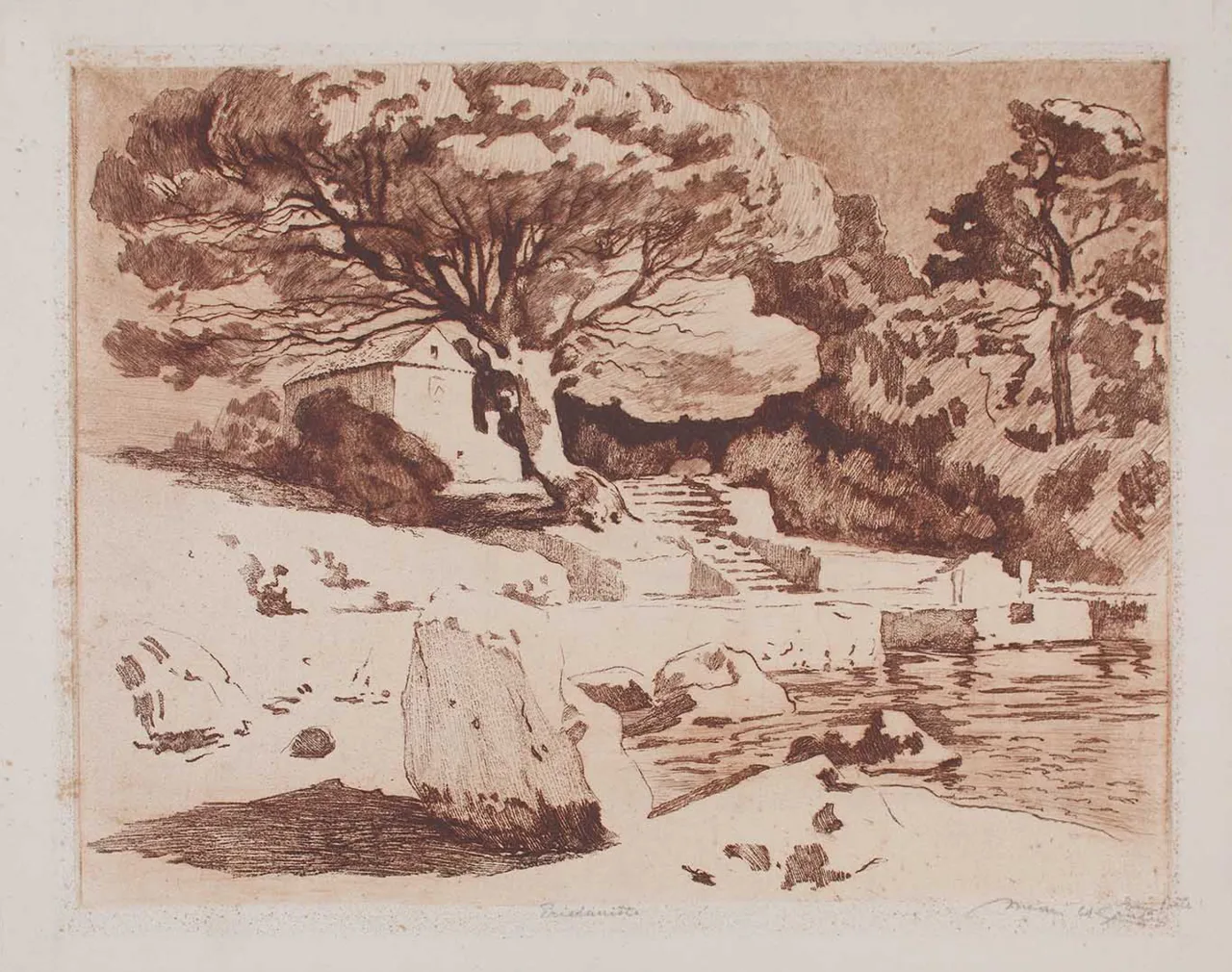
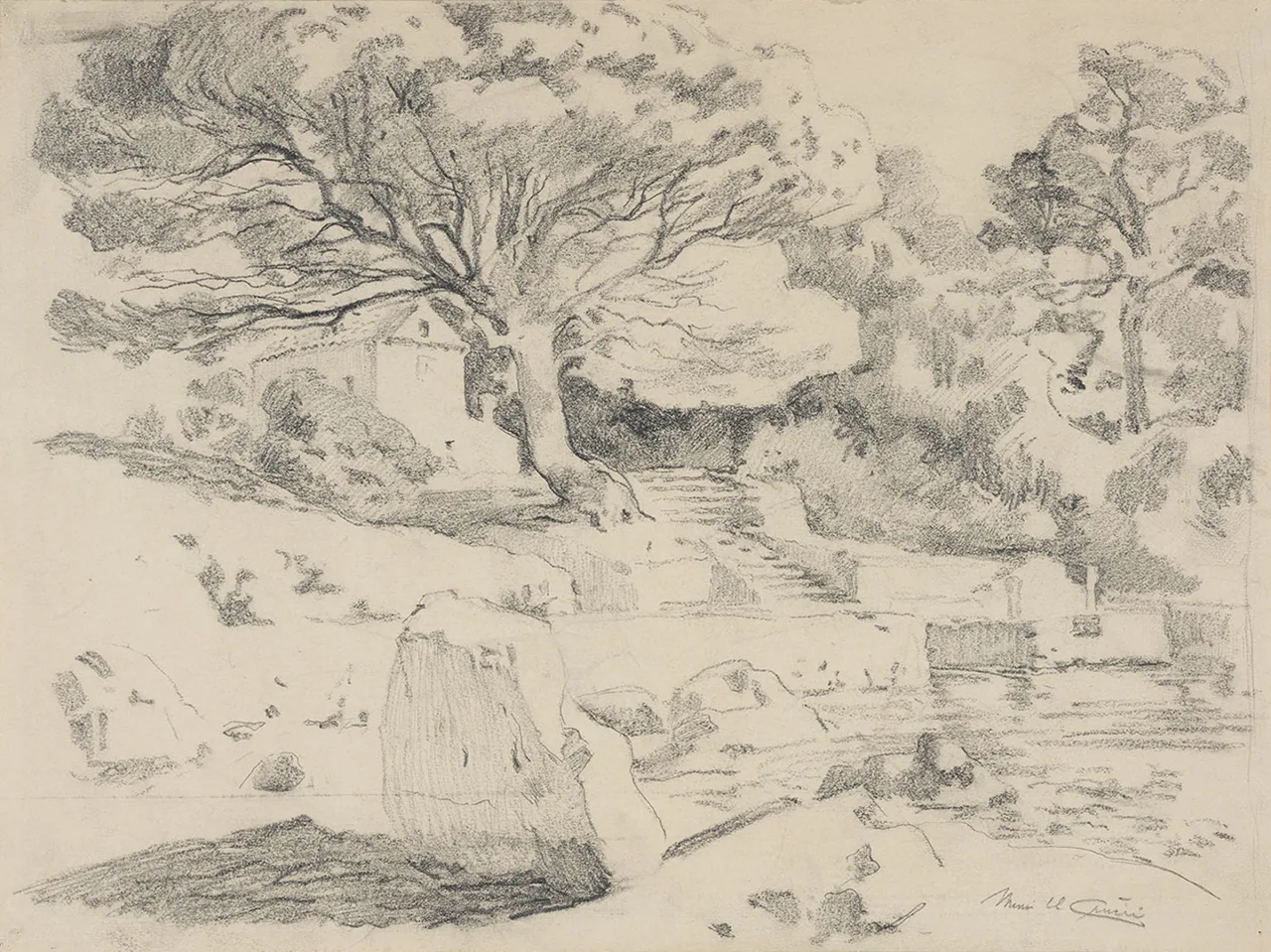
Drawings make a particularly prolific creative unit in Crnčić’s entire work. The confidence and ease of the linear manuscript, as well exceptional drawing prowess as an inevitable precondition for the graphic procedure, factually support the hypothesis that Crnčić was the first in our environment to apply drawing and print as the means of an independent artistic expression, [21] as confirmed on the example of several sketches in pencil, chalk and charcoal (Splavnica, Mesnička Street in Winter, Garden on Mljet / Port) – the conceptual and motif originals and faithful equivalents of graphic prints.
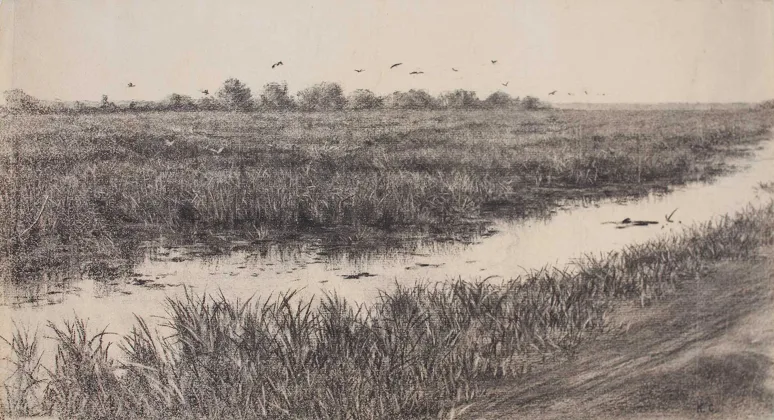
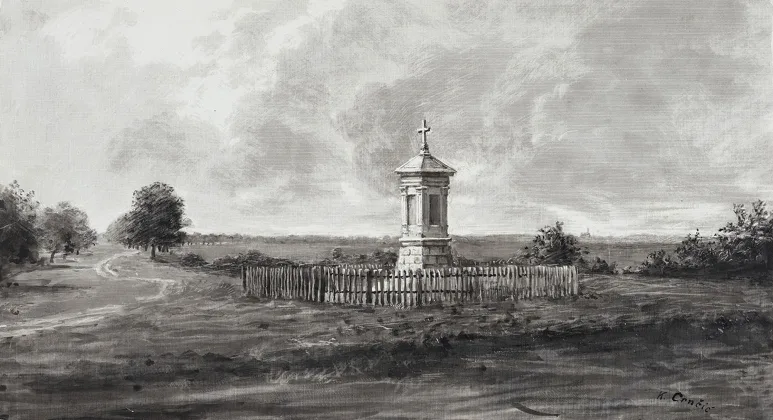
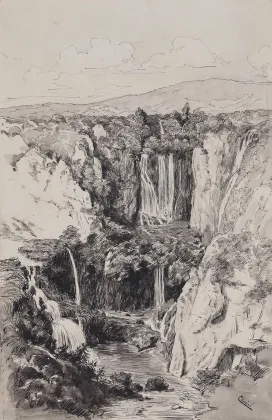
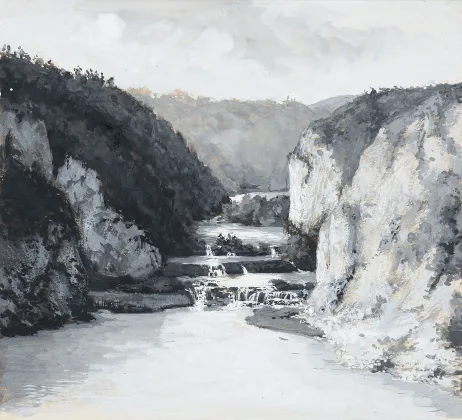
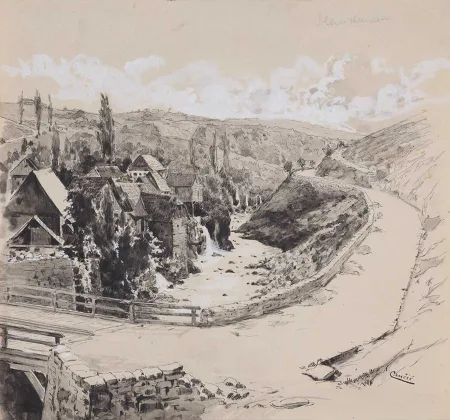
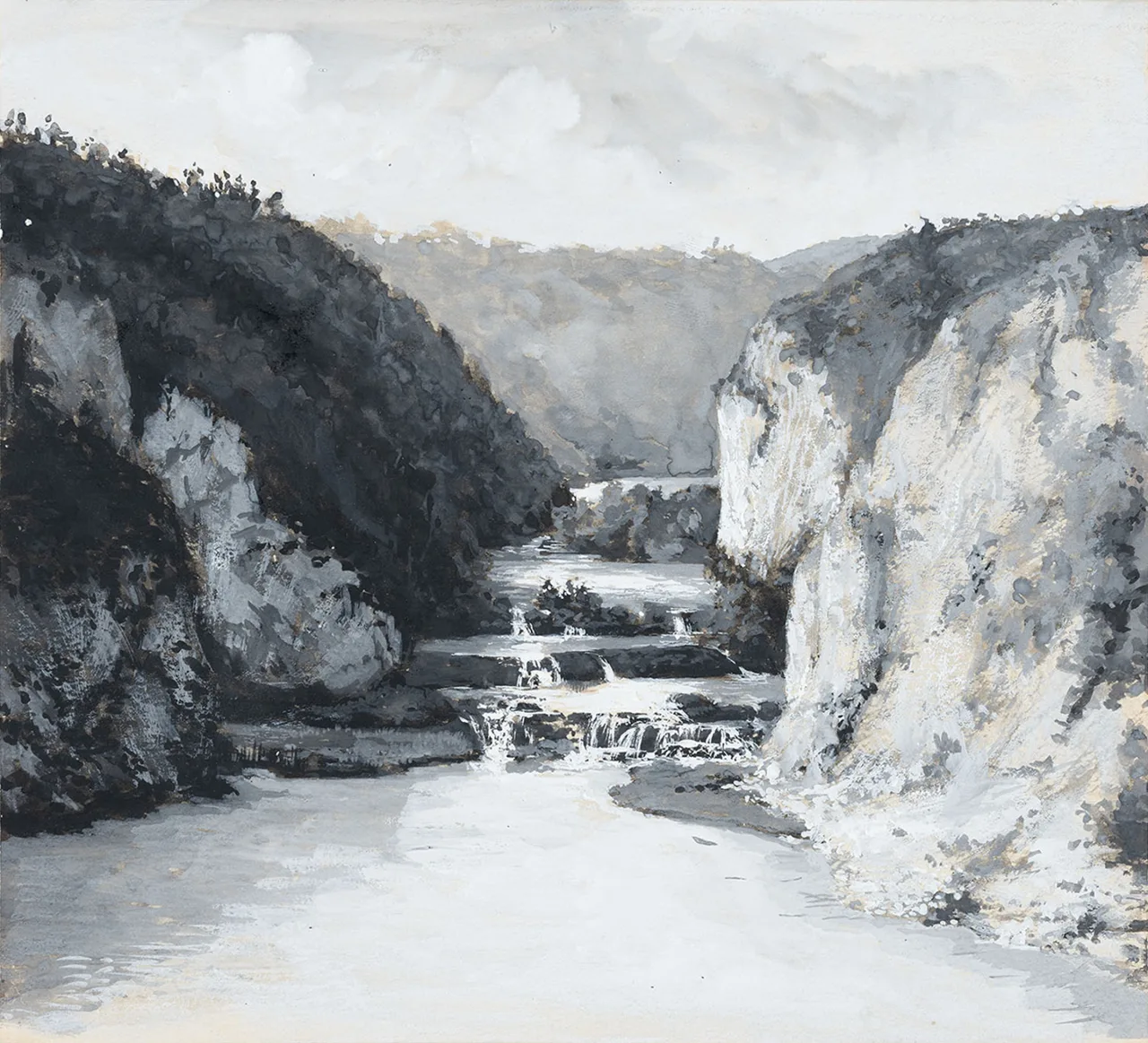
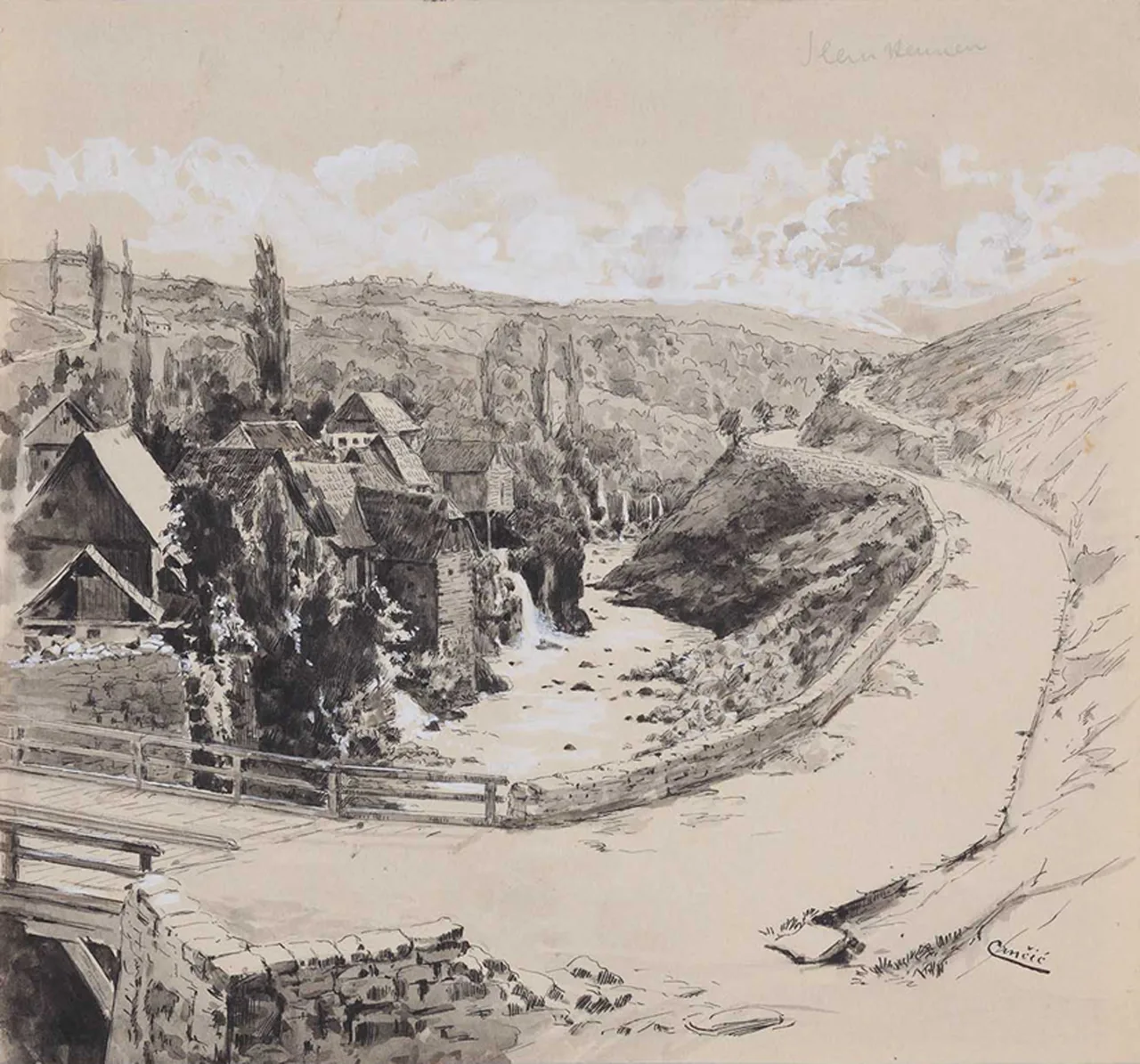
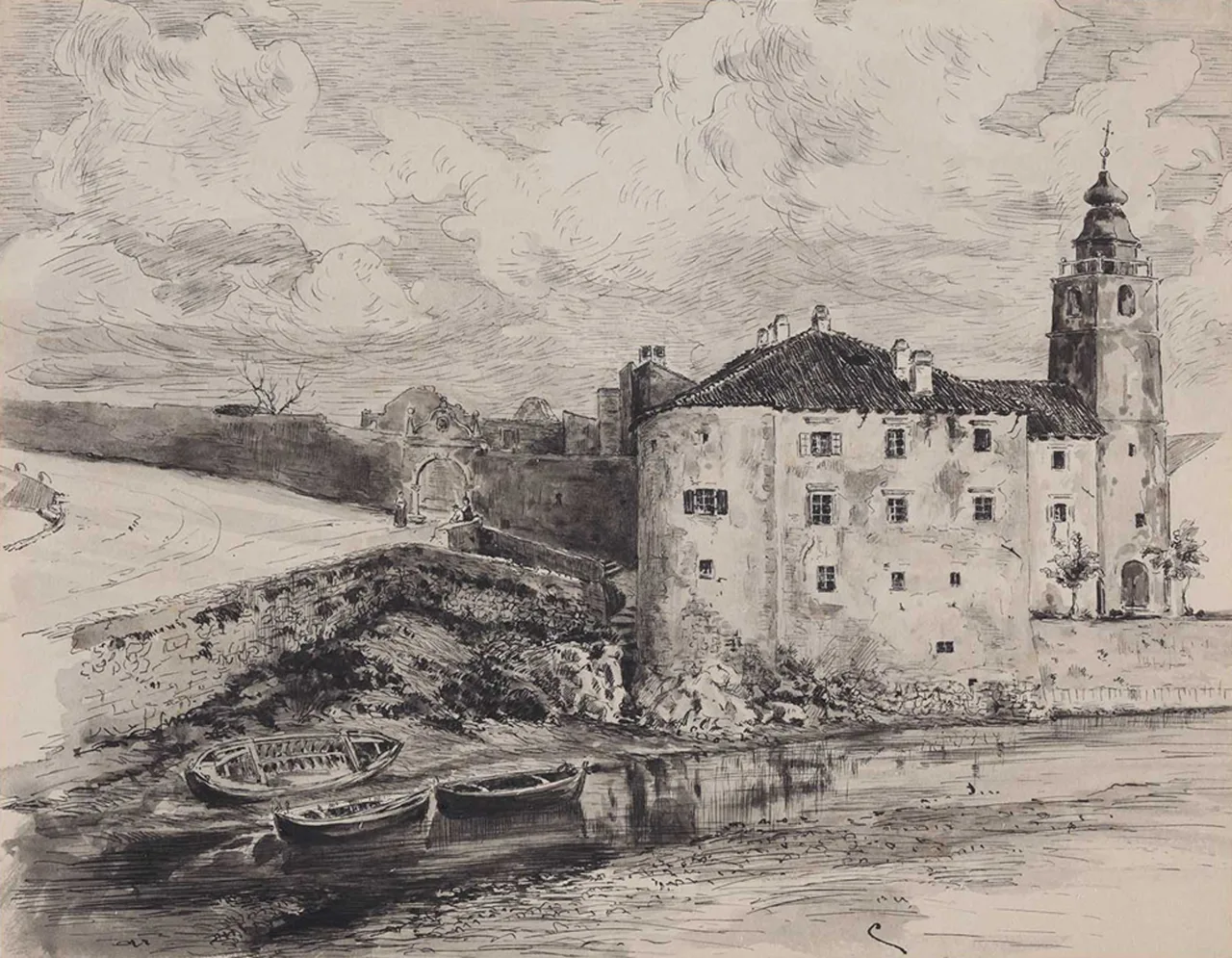
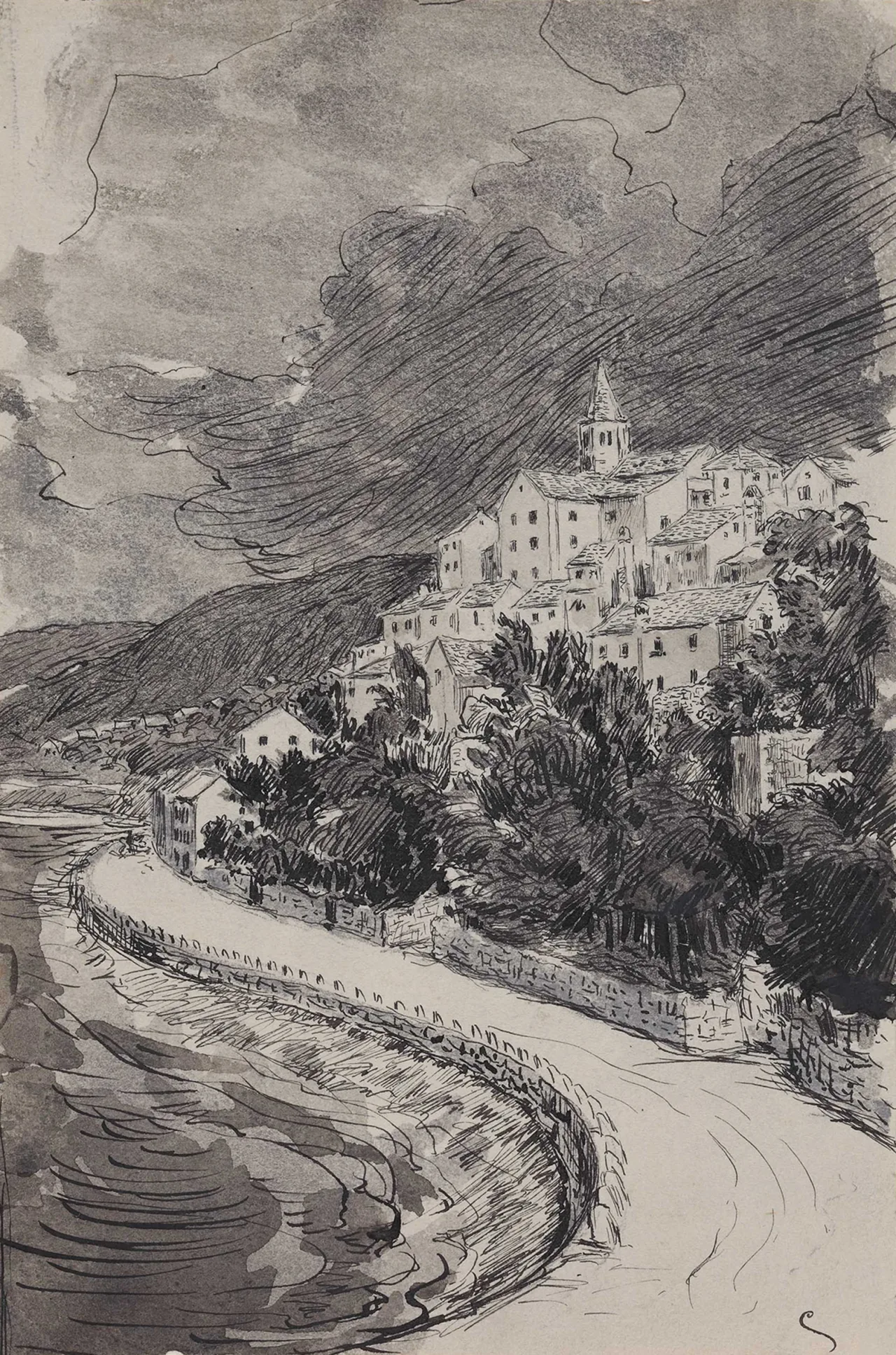
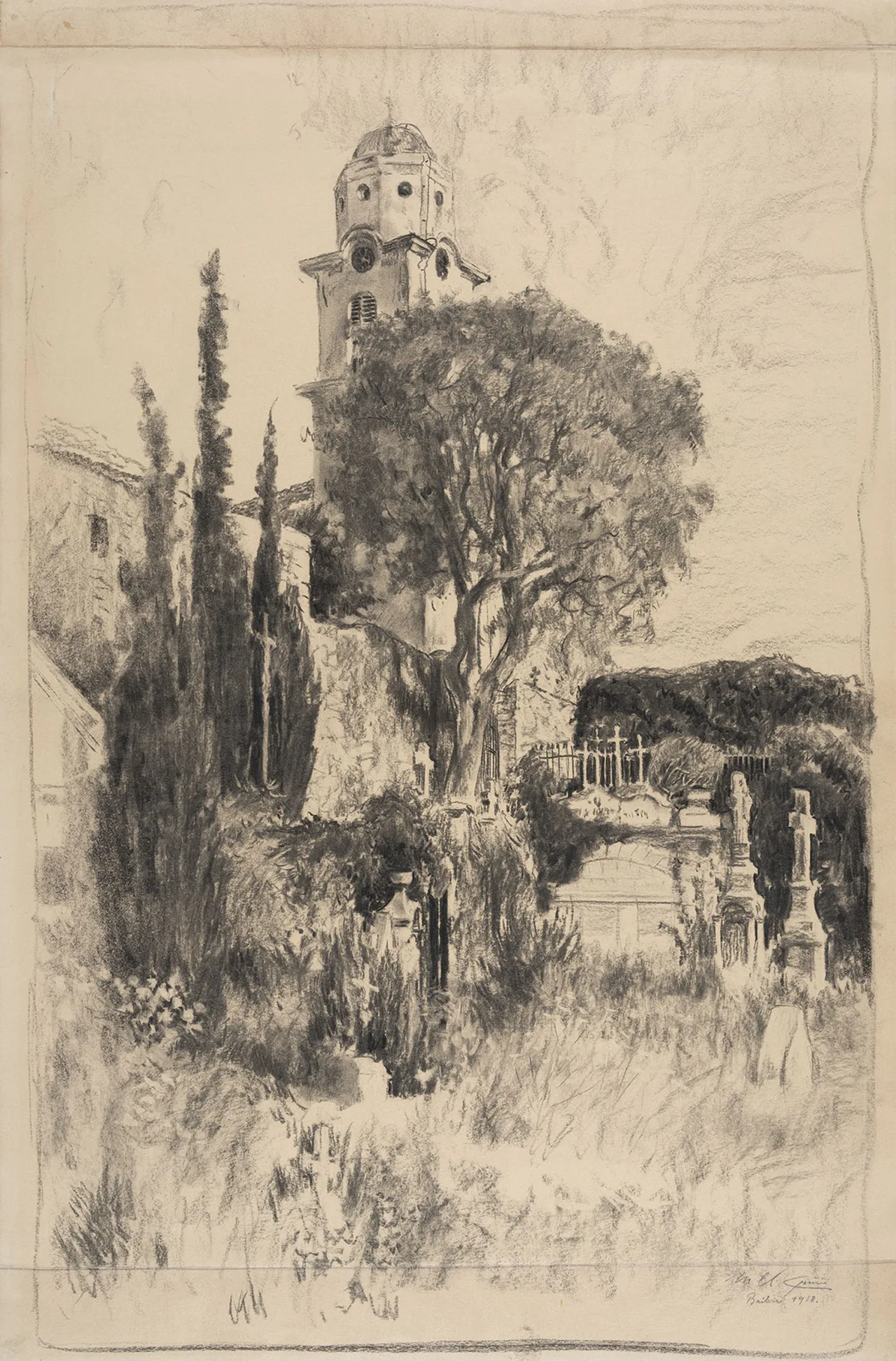
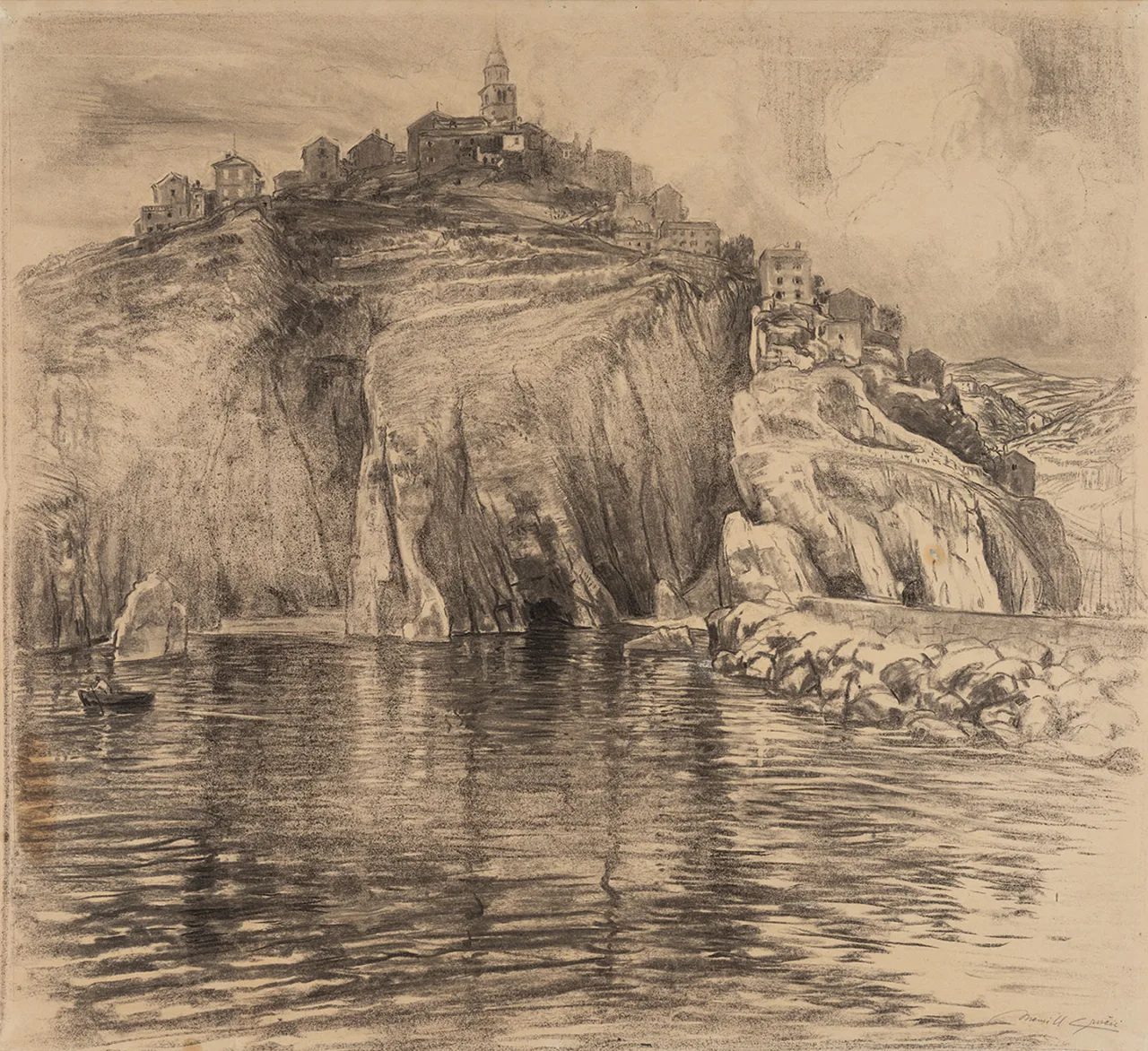
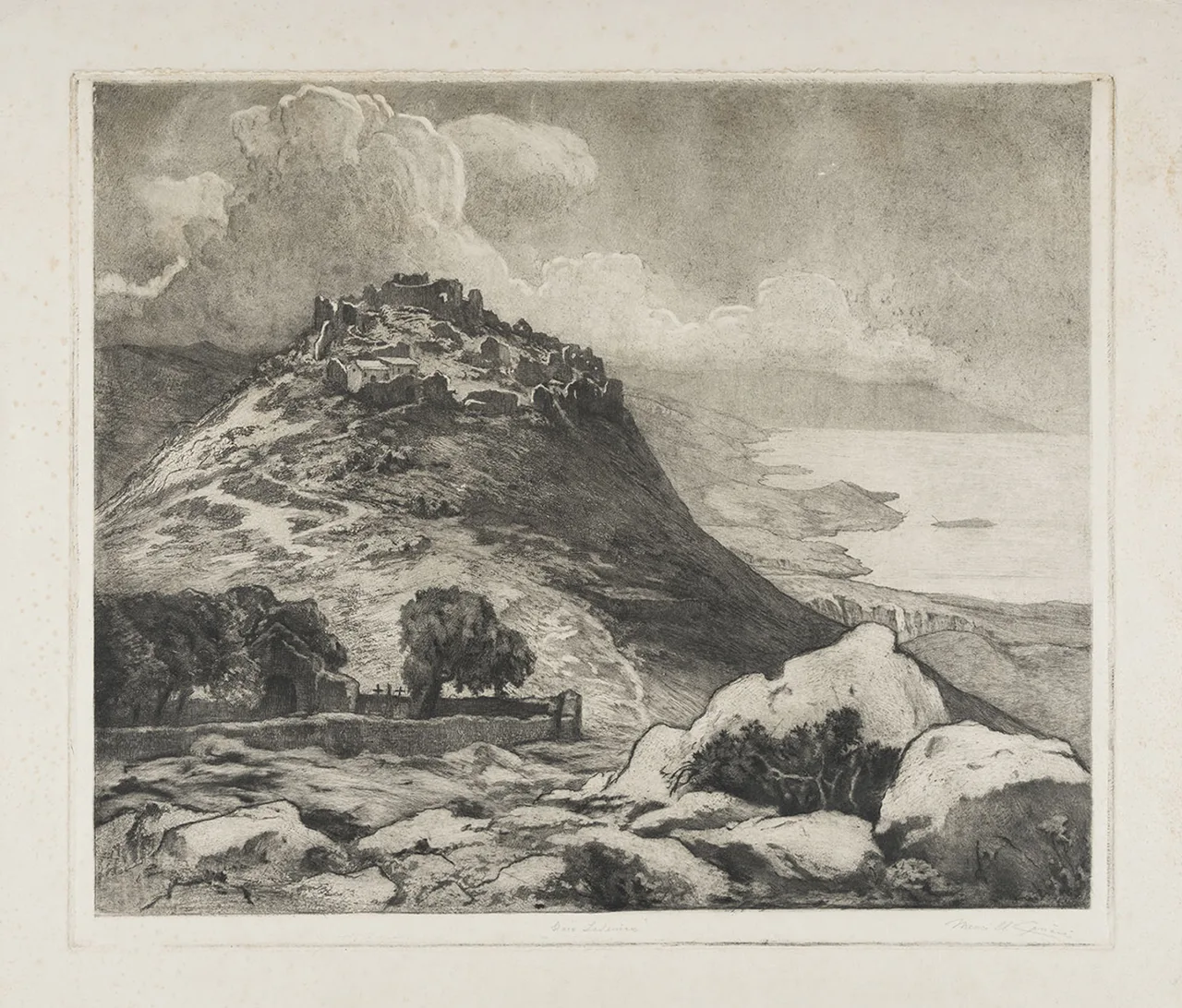
Ljubo Babić, Crnčić’s disciple, testifies of the existence of an immense legacy of drawings Crnčić was “diligently registering, studying and drawing” every day from his childhood to his death, remembering, probably from the travels the professor took them on across the country, “that Crnčić, when weather at the seaside was not favourable for painting, almost all the time drew (…),” and “later executed these studies in oil as well.“ [22] In his lifetime, Crnčić travelled a lot and created directly on location and, obsessed with light and atmospheric phenomena of nature, he easily conveyed the experienced impressions onto a piece of paper, modestly calling them studies, although these pieces, albeit small-scale, almost rival his painterly works impression-wise. The early drawing Slankamen, unique for its shaded outlines of the charcoal dust’s velvety trace, of exceptionally framed panoramic compositions and impressionist morphological syntax, was most often published in catalogues and overviews of Croatian art history. Monochromatic studies of landscape views, made by quick hand strokes in ink and completed with gouache or washing (Slunj, the Plitvice series of painting-drawings), came to life on his travels in 1902 and 1903 around Plitvice Lakes, Hrvatsko primorje and Kvarner, Lošinj and Gorski kotar. [23] During his frequent sojourns in a villa in Novi Vinodolski and its surroundings, after 1913, many vistas of flickering linear stylisations and washed parts of painterly effects were made, in particular Novi and Crikvenica and somewhat later the studies Vrbnik and The Bribir Cemetery, featuring soft linear volumes in charcoal.
A focused selection of drawings of an auratic character, guided primarily by the criterion of high artistic quality, represents immediate impressions which reflect the artist’s landscape mimesis skills, the idiom of plein air manner in a refined harmony with the reality of the depicted.
Along the lines of the researchers of Crnčić’s professional creative work, [24] we particularly point out Crnčić’s significance in his role of the founder of the graphic medium as an independent visual expression, whose disciplinary inauguration was launched precisely with his appearance at the newly established printmaking scene of the 1890s modern art. Schooled in Vienna, he reached the European level of professionality, proven by the fact that already his early prints are kept in the prestigious European collection of prints and drawings in Vienna’s Albertina.
Contemporary critic Elizabeth Clegg in her book Art, Design and Architecture in Central Europe particularly highlights Crnčić’s role of the founder of the stalwart Zagreb graphic school and mentions his painstaking and technically impeccable portrayals of Istrian and Dalmatian topoi as the starting point for the future generations and their upcoming creative inclinations in the 1900s, especially visible in his most propulsive student and disciple Tomislav Krizman. [25] From the point of view of evaluating Crnčić’s drawing work, once again we need to elevate him to the status of a pioneer of landscape painting, next to Ferdo Kovačević, at the forefront on the development of this genre in the historical and artistic periodisation of Croatian modernism and its passionate fan.
In conclusion, a valorisation of the thematic and technical segment of his outstanding creative work, particularly printmaking and drawing, contextualises and reconsiders the development of his mannerist syntax stylistically and chronologically anchored in the foundations of the Munich and hermeneutic 19 th century academism and surging stylistic pluralisms such as symbolism and pleinairism, as well as realisms of the first decades of the 20 th century.
Ružica Pepelko
[1] About the chronological definitions of the paradigm art around 1900 in the wake of Babić’s hypothesis of 1890 as roughly the starting year of Croatian modernism, see more in: Zlatko Posavac, “Teorijsko-historiografska problematizacija hrvatske likovne umjetnosti na razmeđu 19. i 20. stoljeća”, Peristil, 31/1988, 45-50
[2] Božena Šurina, (Menci Klement Crnčić), Projekt reprinta iz umjetnikove ostavštine, exhibition catalogue, Zagreb: Kula Lotršćak, 1988, 15
[3] Petra Vugrinec, “Crnčićevi otisci ljepote”, in: Menci Clement Crnčić (1865. – 1930.): Retrospektiva, exhibition catalogue, ed. Petra Vugrinec, Zagreb: Klovićevi dvori Gallery, 2016, 43-44
[4] More in: Antun Gustav Matoš, “Slikar Crnčić”, in: Savremenik, 1910, 5/4, 281-285
[5] The data about his studying at this Viennese educational institution were taken from: Lovorka Magaš Bilandžić, “The Vienna Kunstgewerbeschule and Croatian Art in the First Decades of the 20 th Century”, in: The Entangled Histories of Vienna, Zagreb and Budapest (18 th-20 th Century), ed. Iskra Iveljić, Zagreb: Faculty of Humanities and Social Sciences, University of Zagreb, 2015, 383
[6] V. M. [Verena Manč]: “William Unger i M. Kl. Crnčić”, in: Obzor, 1937, 77/55, 2
[7] Božidar Gagro, “Hrvatska grafika u prvoj polovini XIX. stoljeća”, in: Jugoslavenska grafika 1900-1950, exhibition catalogue, Belgrade: Museum of Contemporary Art, 1977, 27
[8] Šurina divides Crnčić’s work into three stages: 1. academic prints of symbolist inclinations, 2. motifs of Zagreb around 1910, and 3. seaside-inspired prints in the 1920s, in: Božena Šurina, Menci Klement Crnčić: Retrospektivna izložba, exhibition catalogue, Zagreb: Art Pavilion, 1990, 38-39
[9] Vugrinec exemplifies Georges Rodenbach’s short novel Bruges-la-Morte as referential literary content of panting around the time, as a reflection of the atmosphere of Crnčić’s prints, in: Vugrinec, 2016, 43
[10] He underlines as the finest plates Salutation, Medveja, The Last Offspring. Ljubo Babić, “Hrvatska grafika u XIX. stoljeću”, in: Kolo, book 17, 1936, 115
[11] Božena Šurina, “Menci Cl. Crnčić”, in: Grgo Gamulin, Hrvatsko slikarstvo na prijelazu XIX. u XX. stoljeće, Zagreb: Naprijed, 1995, 98
[12] Iva Gobić Vitolović, Sanja Serhatlić, “Konzerviranje i restauriranje bakropisa chine-collé Mencija Clementa Crnčića”, in: Portal, Annual Publication of the Croatian Conservation Institute, 2019, http://dx.doi.org/10.17018/portal.2019.10 (accessed on 1 September 2025)
[13] Dževad Hozo, Umjetnost multioriginala, Mostar: Prva književna komuna, 1988, 277
[14] Gobić Vitolović, Serhatlić, 2019, 177-178
[15] Possibly he also watercoloured the prints, but more rarely, because the paint dissolving in water blurred the etching lines, more in: Gobić Vitolović, Serhatlić, 2019, 176
[16] Hozo, 1988, 93-94
[17] Ljubo Babić, “Hrvatska grafika u XIX. stoljeću”, in: Kolo, book 17, 1936, 116; Ljubo Babić, Umjetnost kod Hrvata, Zagreb: Naklada A. Velzek, 1943,136-137
[18] Gagro, 1977, 28
[19] Darija Alujević, “Pedagoški i muzejsko-galerijski rad Mencija Clementa Crnčića”, in: Menci Clement Crnčić (1865. – 1930.): Retrospektiva, exhibition catalogue, ed. Petra Vugrinec, Zagreb: Klovićevi dvori Gallery, 2016, 60
[20] A comprehensive overview of Crnčić’s work was conducted by the author of Crnčić’s retrospective exhibition Petra Vugrinec in association with Darija Alujević, the author of the text of Crnčić’s teaching and museum/gallery work, and Frano Dulibić, the author of the text on cartoon, see more in the exhibition catalogue: Vugrinec, 2016
[21] Enciklopedija likovnih umjetnosti, Zagreb: Leksikografski zavod FNRJ, 1959, book 1, 700; Gagro, 1977, 26
[22] Babić, 1936, 114
[23] Around that time, he travelled with Čikoš and Krizman. He expanded the itinerary trajectory with Milan Šenoa in 1905 onto the territories of Italy, Switzerland, Belgium, Germany and Austria, in 1907 with Oton Iveković to Italy all the way to Naples, and in 1908 to Bosnia and Herzegovina with Gustav Pongratz and Emil Kulmer; Šurina, 1990, 179
[24] Zdenko Vojnović: “Hrvatska grafika”, in: Hrvatska grafika danas, Zagreb: Ars, 1936, 8; Šurina, 1990, 35-36, 43 (note 21)
[25] Elizabeth Clegg, “The Post-Secession Diaspora of Croats and Slovenes”, in: Art, Design and Architecture in Central Europe 1890-1920, ed. Nikolaus Pevsner / Pelican History of Art, New Haven and London: Yale University Press, 2006, 91, 94, 95, 136

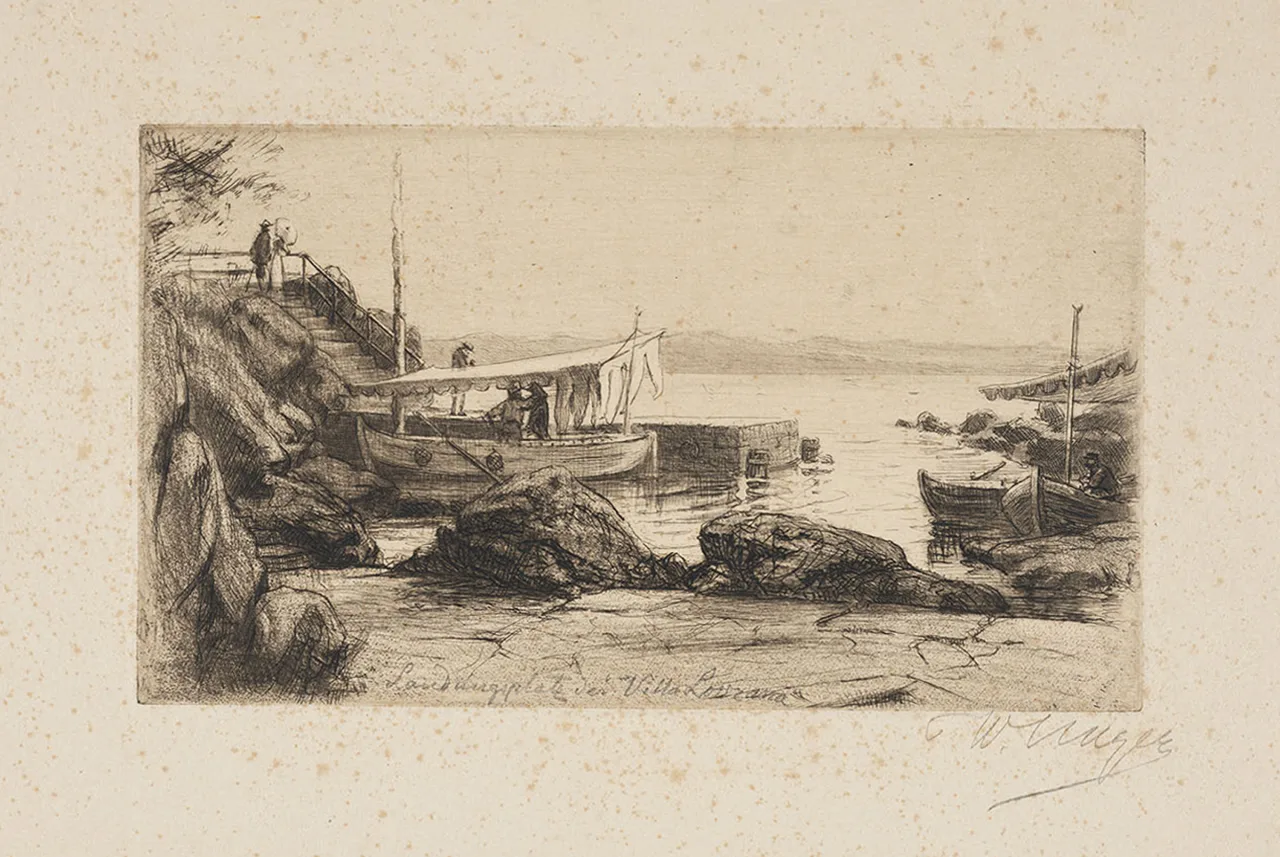
Landungsplatz bei Villa Lovrana
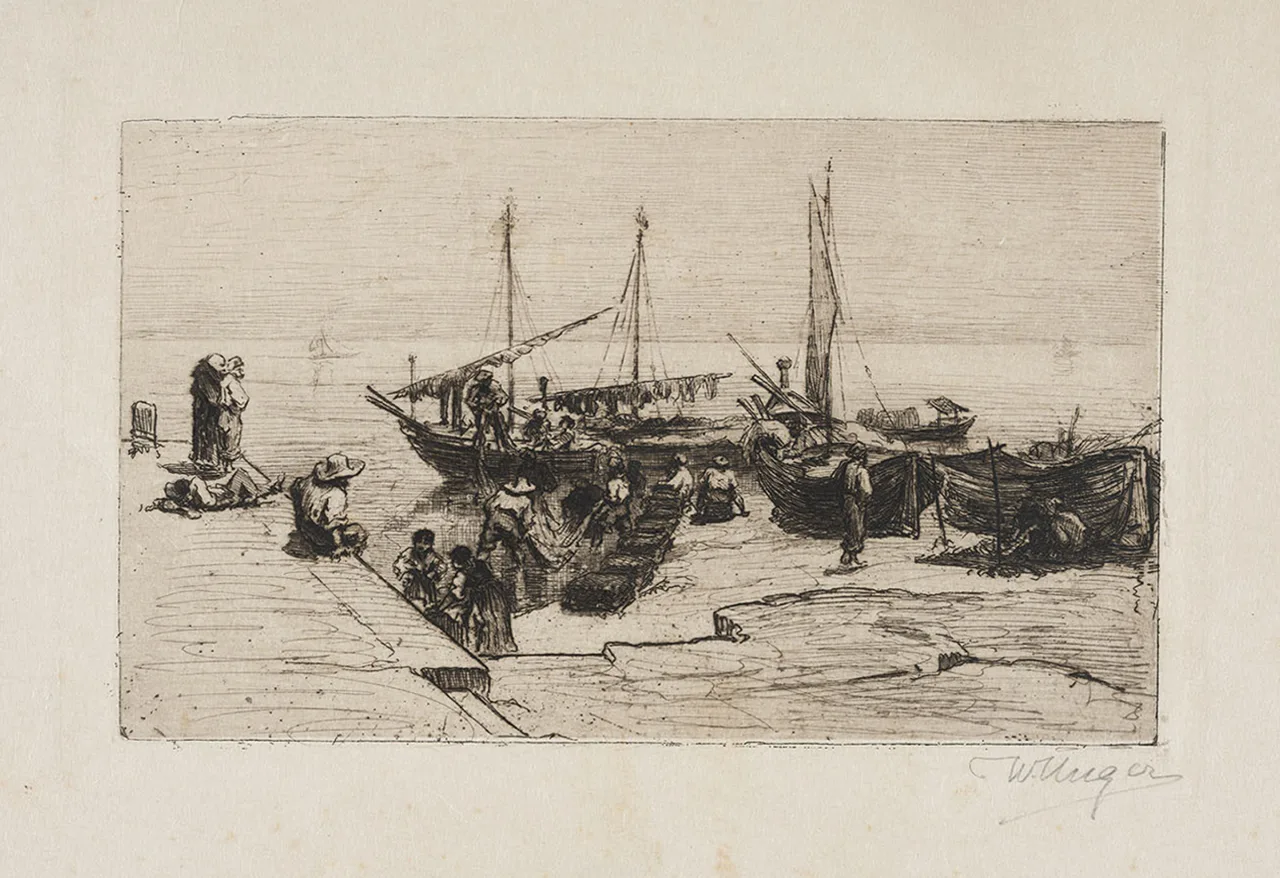
Fishermen in the Harbour